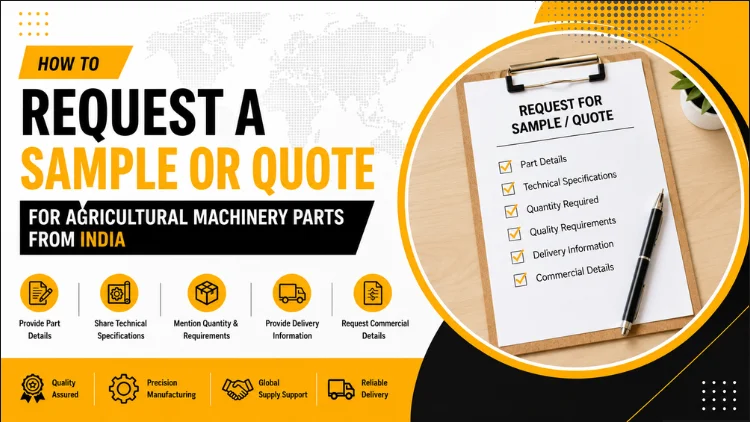
How to Request a Sample or Quote for Agricultural Machinery Parts from India

If you're sourcing agricultural machinery parts from India, requesting a product sample or quotation is one of the most important steps before placing a purchase order. A well-prepared request helps manufacturers understand your requirements, provide accurate pricing, and recommend suitable production options. Whether you're looking… Read More

Harvester Mower Blades: Sharpness Retention, Material & Export Standards

Harvesting efficiency depends not only on the machine itself, but also on the quality of the mower blades. A well-manufactured harvester mower blade delivers clean cuts, reduces machine strain, and lasts longer under demanding field conditions. Its performance is determined by three key factors: the… Read More

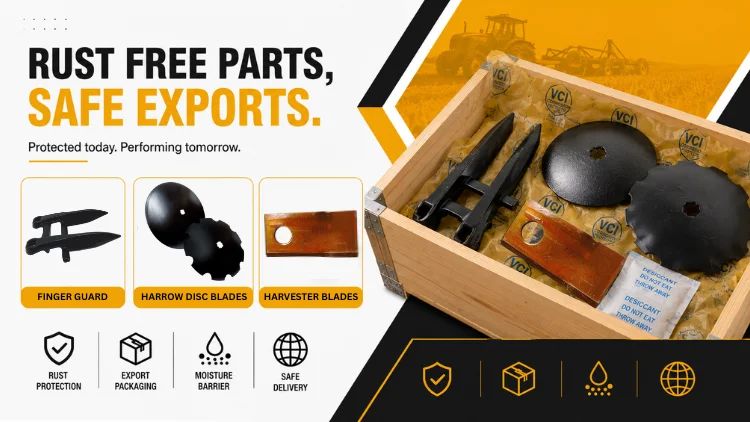
How Agricultural Machinery Parts Are Protected Against Rust During Export

Agricultural machinery parts often travel thousands of miles before reaching distributors, dealers, OEMs, and end users. During international shipping, these components can be exposed to humidity, condensation, salt-laden air, and temperature fluctuations that may lead to rust and corrosion. To prevent damage, manufacturers and exporters… Read More

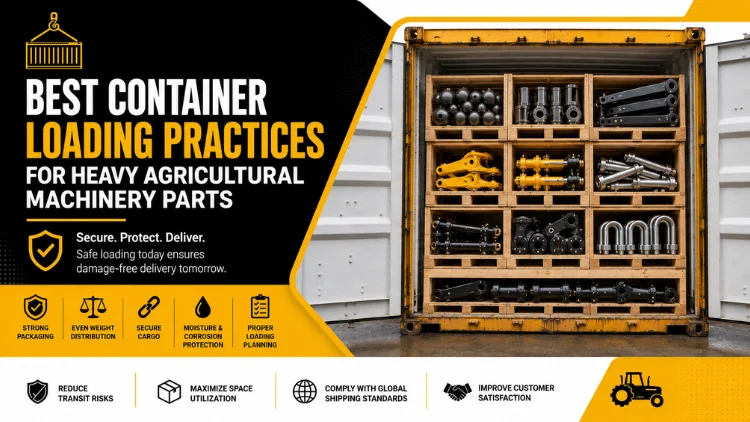
Best Container Loading Practices for Heavy Agricultural Machinery Parts

International buyers expect agricultural machinery parts to arrive in perfect condition, regardless of the distance traveled. However, transporting heavy components such as brake drums, hubs, axles, rotavator parts, cultivator components, transmission assemblies, and other machinery spare parts presents unique logistical challenges. Improper loading can lead… Read More

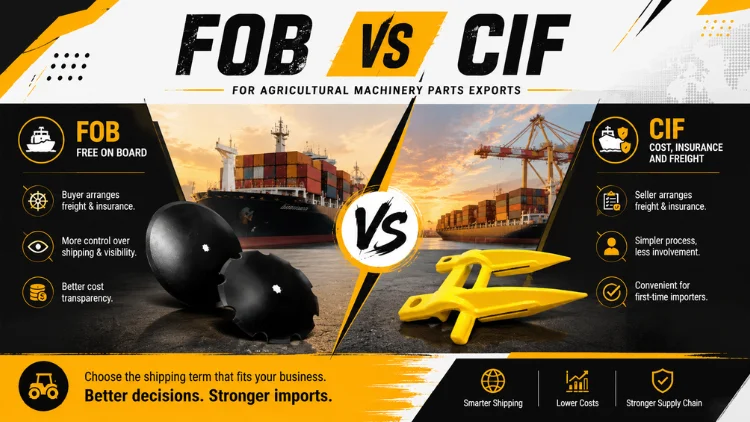
FOB vs CIF for Agricultural Machinery Parts Exports: Which Shipping Term Is Right for Importers?

When importing agricultural machinery parts from India or other manufacturing countries, one of the most important decisions is choosing the right shipping term. The two most commonly used Incoterms for sea freight shipments are FOB (Free On Board) and CIF (Cost, Insurance and Freight). The… Read More

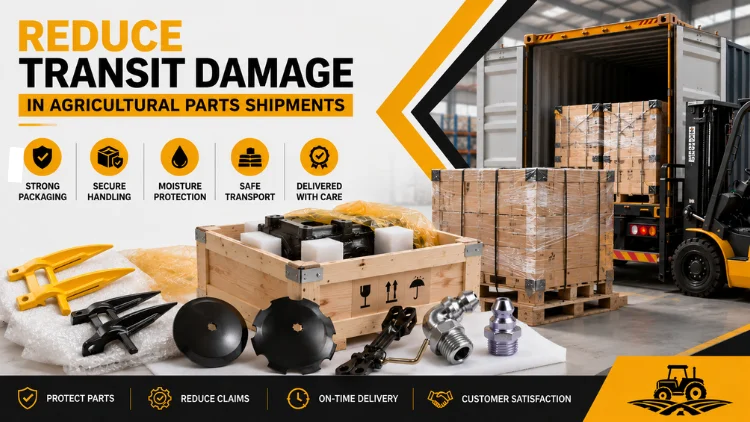
How to Reduce Transit Damage in Agricultural Parts Shipments

Agricultural parts are often transported over long distances through multiple warehouses, distribution centers, and transportation networks before reaching dealers, repair shops, or farmers. During transit, these parts can be exposed to impacts, vibration, moisture, improper handling, and load shifting, all of which increase the risk… Read More

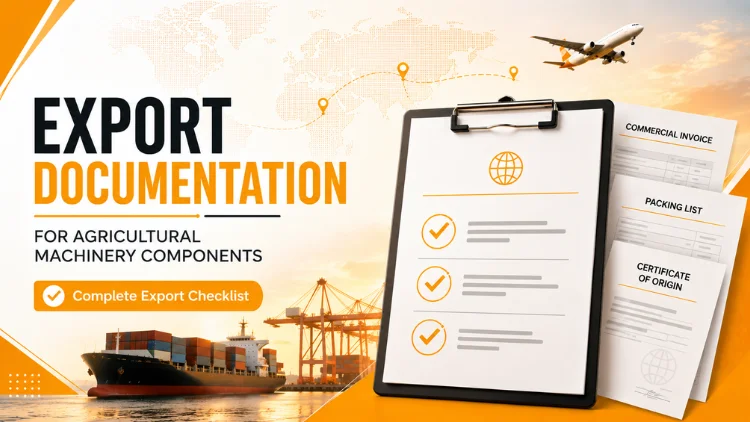
Export Documentation Required for Agricultural Machinery Components: Complete Checklist

Exporting agricultural machinery components involves more than preparing products for shipment. Exporters must provide accurate commercial, customs, shipping, and compliance documents to ensure smooth international trade. Missing or incorrect paperwork can lead to customs delays, shipment holds, penalties, and additional costs. This guide covers the… Read More

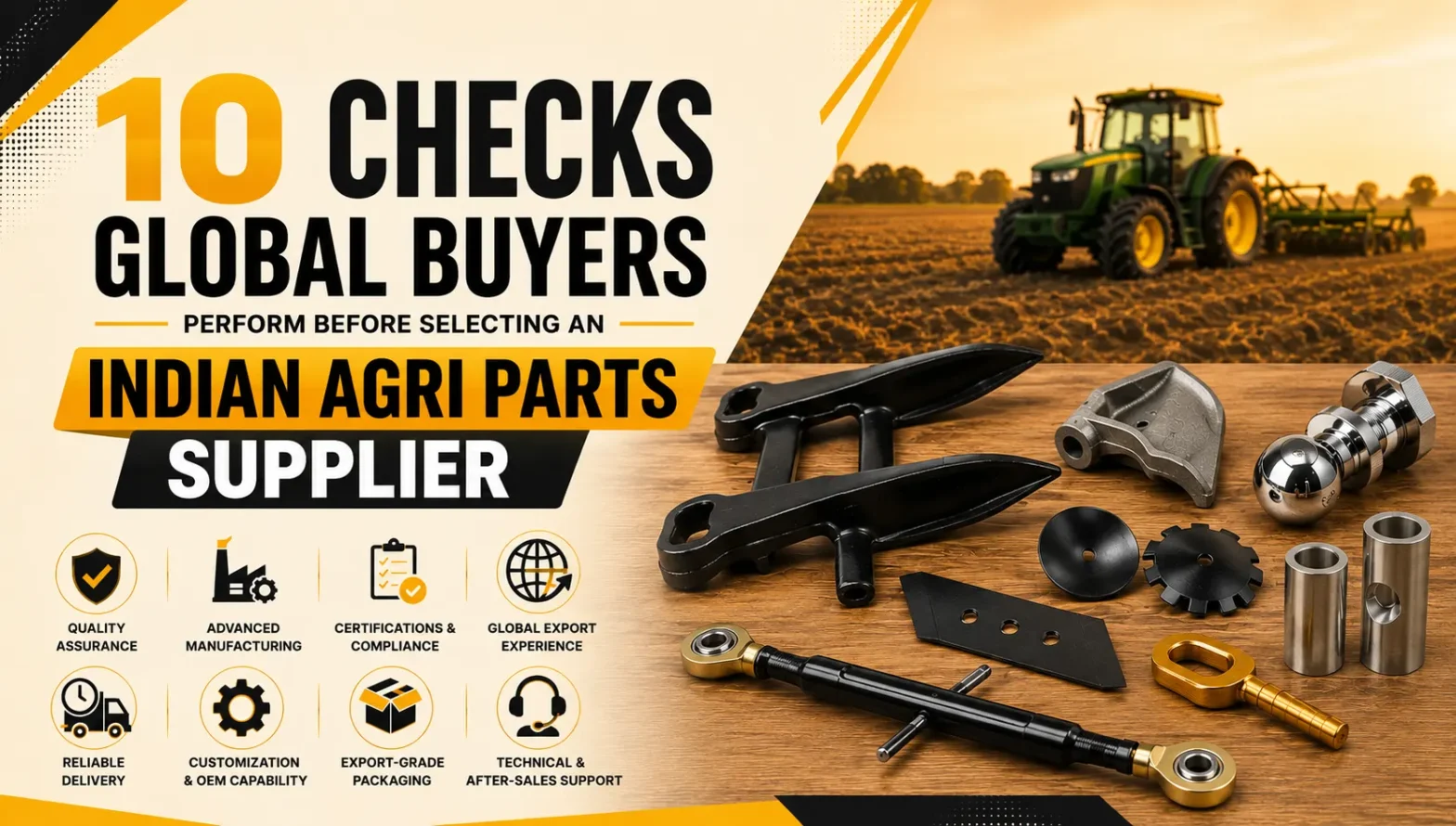
What Global Buyers Check Before Sourcing Agri Parts from India

India has become a preferred sourcing destination for agricultural parts due to its manufacturing capabilities, competitive pricing, and growing export network. However, experienced importers, distributors, OEMs, and procurement managers do not select suppliers based on price alone. Before placing orders, global buyers conduct a detailed… Read More