 (+91) 842-700-1426
  agriparts@jcblmail.com
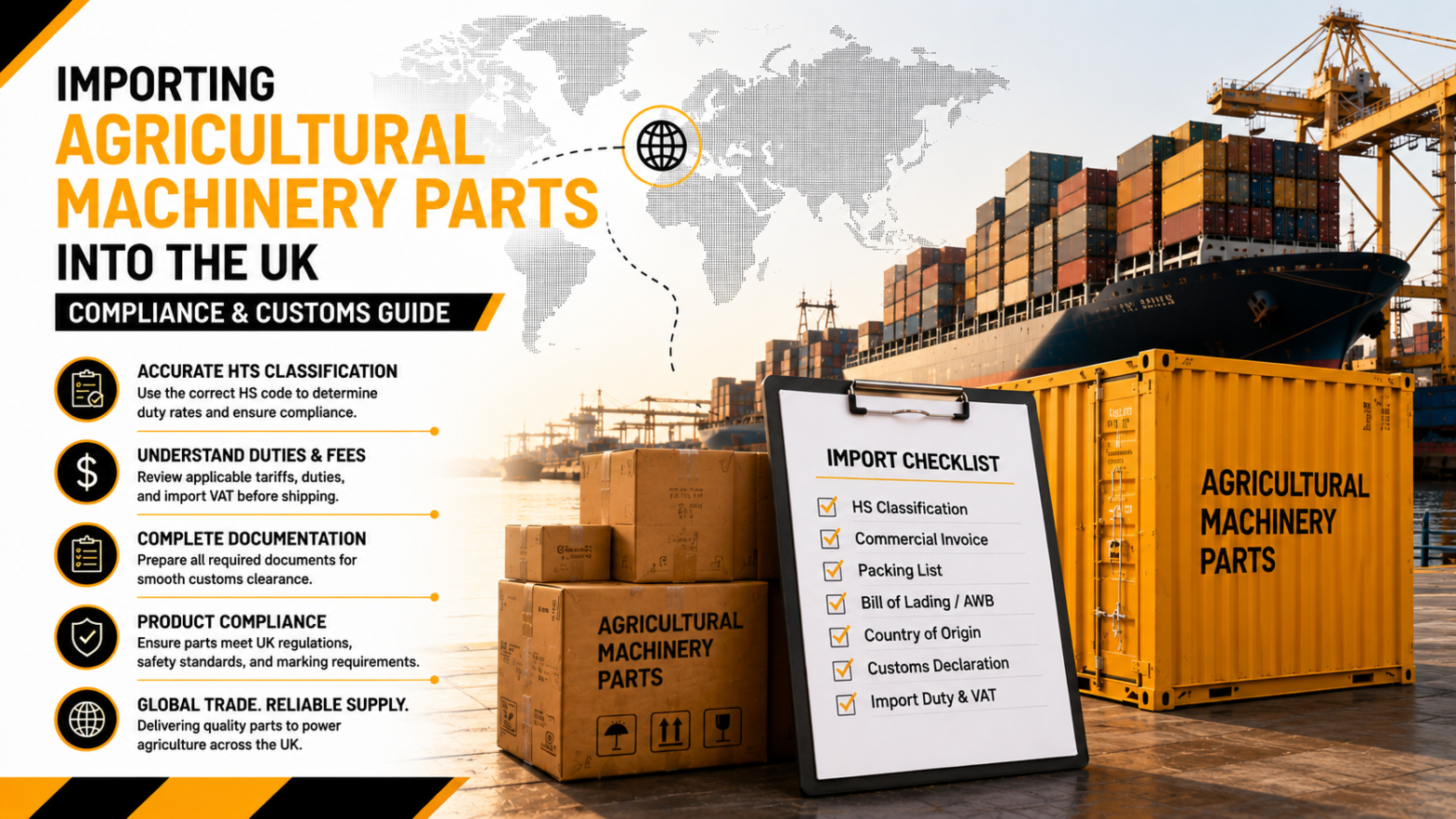
Poland is one of Europe’s largest agricultural markets, with a well-established farming sector that depends on reliable machinery to maintain productivity. As tractors, harvesters, seeders, and other equipment require regular maintenance, demand for quality agricultural machinery parts remains consistent. For international manufacturers and exporters, Poland also serves as a strategic gateway to the wider European Union (EU) market. However, importing agricultural machinery parts into Poland involves more than finding a competitive supplier. Importers must understand EU regulations, prepare accurate documentation, ensure product compliance, and work with experienced manufacturers to avoid customs delays and supply chain disruptions. Why Poland Is an Attractive Market for Agricultural Machinery Parts Poland has one of the largest agricultural sectors in the European Union, creating ongoing demand for replacement parts and maintenance components across a wide range of farming equipment. The country’s extensive agricultural machinery fleet supports a strong aftermarket for tractor parts, harvesting components, hydraulic systems, tillage equipment, and wear parts. As an EU member state, Poland also offers efficient access to other European markets. Once products are imported and customs procedures are completed in accordance with EU requirements, businesses can distribute goods throughout the single market under applicable regulations. Combined with modern logistics infrastructure and strong regional connectivity, Poland has become an important sourcing destination for agricultural machinery suppliers targeting Central and Eastern Europe. Import Requirements for Agricultural Machinery Parts in Poland Successful imports begin with understanding Poland’s customs and regulatory requirements. While specific obligations depend on the product type, importers should generally ensure the following: Incorrect product classification or incomplete documentation can result in customs delays, additional inspections, or unexpected import costs. Working with suppliers experienced in exporting to the EU can help minimize these risks. EU Regulations Importers Should Know Agricultural machinery parts entering Poland must comply with relevant European Union legislation where applicable. Importers should evaluate product requirements before shipment rather than assuming every component is subject to the same rules. CE Marking Not all agricultural machinery parts require CE marking. It generally applies only when a product falls within the scope of specific EU legislation, such as certain machinery, electrical equipment, or safety components. Importers should confirm whether CE marking is required for the specific product category. REACH Compliance The EU REACH Regulation governs the registration and safe use of chemical substances. Components containing coatings, plastics, rubber materials, adhesives, or chemical substances may need to comply with REACH requirements. RoHS Requirements RoHS primarily applies to electrical and electronic equipment. Electronic control modules, sensors, wiring systems, and other electrical components may fall within its scope, while many mechanical spare parts do not. Product Safety and Technical Documentation Importers should maintain relevant technical documentation, material specifications, and conformity information where required. Proper documentation supports customs clearance and demonstrates regulatory compliance if requested by authorities. Documents Required for Import Preparing complete documentation helps streamline customs clearance and reduces the likelihood of shipment delays. Common import documents include: Document Purpose Commercial Invoice Declares product value for customs assessment Packing List Provides shipment details and package contents Bill of Lading or Air Waybill Serves as the transport document Customs Declaration Required for customs clearance Certificate of Origin (where applicable) Confirms the product’s manufacturing origin Product Specifications Verifies technical details and product identification Compliance Documents (if applicable) Demonstrates conformity with relevant EU regulations Importers should also confirm whether additional documentation is required for specific products or trade agreements. How to Choose a Reliable Agricultural Machinery Parts Manufacturer Selecting the right manufacturing partner is often as important as meeting import requirements. A reliable supplier helps reduce quality issues, delivery delays, and long-term sourcing risks. When evaluating manufacturers, consider: Requesting product samples, reviewing certifications, and conducting supplier audits or third-party inspections can provide additional confidence before placing larger orders. Common Challenges When Importing Agricultural Machinery Parts into Poland Even experienced importers can encounter challenges throughout the sourcing process. Understanding common issues helps businesses prepare more effectively. Working closely with experienced suppliers and freight partners can help reduce these risks while improving overall supply chain efficiency. Tips to Reduce Import Costs Without Compromising Quality Reducing procurement costs should never come at the expense of product reliability. Businesses can improve cost efficiency through practical sourcing strategies such as: These strategies help improve overall supply chain performance while maintaining consistent product quality. Conclusion Importing agricultural machinery parts into Poland offers significant opportunities for manufacturers, distributors, and B2B buyers serving one of Europe’s largest agricultural markets. Success depends on more than competitive pricing—it requires understanding EU import requirements, preparing accurate documentation, ensuring regulatory compliance, and partnering with reliable manufacturers capable of delivering consistent quality. By following a structured sourcing strategy and working with experienced export partners, businesses can improve customs efficiency, strengthen supply chain reliability, and build long-term relationships within Poland’s growing agricultural machinery market. FAQs