
 (+91) 842-700-1426
  agriparts@jcblmail.com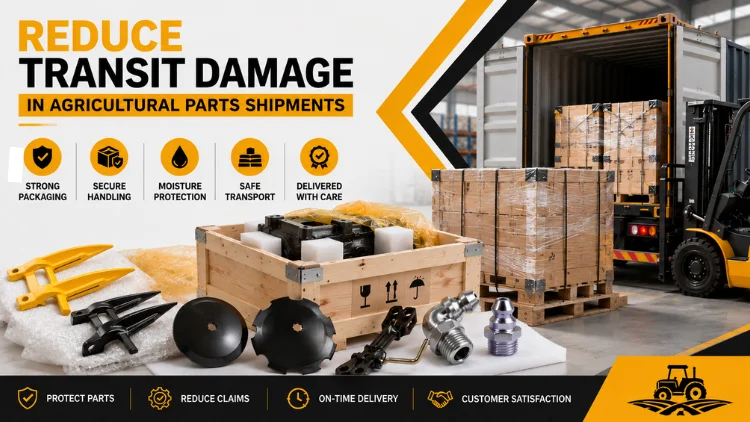
Agricultural parts are often transported over long distances through multiple warehouses, distribution centers, and transportation networks before reaching dealers, repair shops, or farmers. During transit, these parts can be exposed to impacts, vibration, moisture, improper handling, and load shifting, all of which increase the risk of damage.
Transit damage not only results in replacement costs and shipment delays but can also affect equipment uptime during critical farming seasons. By implementing the right packaging, handling, and logistics practices, suppliers can significantly reduce damage rates and ensure agricultural parts arrive safely and ready for use.
Why Agricultural Parts Are Prone to Transit Damage
Agricultural equipment components present unique shipping challenges compared to many other products.
1. Heavy and Dense Components
Parts such as gearboxes, engine components, hydraulic pumps, axles, and transmission assemblies can be extremely heavy. If not properly secured, they may shift during transportation and damage both the product and surrounding cargo.
2. Irregular Shapes
Many agricultural parts have protruding sections, sharp edges, or unusual dimensions that make them difficult to package securely.
3. Exposure to Harsh Conditions
Agricultural parts are often transported through varying climates and environmental conditions. Moisture, humidity, dust, and temperature fluctuations can cause corrosion or surface deterioration.
4. Multiple Handling Points
Every loading, unloading, transfer, and warehouse stop increases the risk of impacts and mishandling.
Common Types of Transit Damage in Agricultural Parts Shipments
Understanding the most frequent causes of damage helps suppliers implement more effective prevention strategies.
- Impact Damage: Drops, collisions, and rough handling can crack housings, damage machined surfaces, or break sensitive components.
- Rust and Corrosion: Moisture exposure during storage or transportation can lead to corrosion, particularly on metal parts.
- Surface Scratches: Painted, coated, and finished components may suffer cosmetic damage during transit.
- Bent or Deformed Components: Improper stacking or unsecured loads can cause structural deformation.
- Missing Parts and Accessories: Inadequate packaging can result in small components becoming separated or lost during shipment.
Best Practices to Reduce Transit Damage in Agricultural Parts Shipments
1. Select Packaging Based on Part Type and Weight
One of the most effective ways to reduce shipping damage is choosing packaging designed specifically for the component being transported.
For example:
- Heavy gearboxes may require reinforced wooden crates.
- Hydraulic assemblies may need custom foam inserts.
- Electrical components often require anti-static packaging.
- Bearings and precision parts benefit from protective wrapping and cushioning.
The packaging should be capable of withstanding stacking pressure, vibration, and handling stresses throughout the shipping process.
2. Secure Components to Prevent Movement
Even durable agricultural parts can be damaged if they move inside the package.
Use:
- Foam inserts
- Molded supports
- Cushioning materials
- Protective dividers
- Internal restraints
Eliminating movement inside the package significantly reduces impact-related damage.
3. Protect Parts from Moisture and Corrosion
Metal agricultural components are especially vulnerable to moisture during transportation.
Effective corrosion prevention measures include:
- Vapor corrosion inhibitor (VCI) packaging
- Moisture barrier bags
- Protective oil coatings
- Desiccant packs
- Sealed packaging systems
These solutions help maintain product quality during long-distance domestic and international shipments.
4. Use Proper Palletization Techniques
Poor palletization is a leading cause of shipment damage.
To improve shipment stability:
- Use pallets rated for the load weight.
- Distribute weight evenly.
- Secure loads with stretch wrap or strapping.
- Apply corner and edge protectors.
- Avoid overhanging products.
A stable pallet reduces movement and improves handling safety throughout the supply chain.
5. Label Shipments Clearly
Clear handling instructions help reduce human error during transportation.
Important labels may include:
- Fragile
- This Side Up
- Heavy Item
- Do Not Stack
- Handle with Care
Proper labeling provides handlers with critical information that can prevent avoidable damage.
6. Conduct Pre-Shipment Inspections
A thorough inspection before dispatch helps identify packaging and product issues before they become costly claims.
A typical inspection should verify the following:
- Product condition
- Packaging integrity
- Correct labeling
- Pallet stability
- Shipping documentation
This step acts as a final quality control checkpoint.
7. Choose Logistics Partners with Industrial Shipping Experience
Not all carriers have experience handling heavy industrial and agricultural components.
When selecting a logistics provider, evaluate:
- Experience with machinery parts
- Damage claim history
- Shipment tracking capabilities
- Handling procedures
- Delivery performance
Reliable transportation partners play a critical role in reducing damage rates.
8. Minimize Handling and Transfer Points
Each additional transfer creates another opportunity for mishandling.
Whenever possible:
- Use direct shipping routes.
- Consolidate shipments.
- Reduce warehouse transfers.
- Avoid unnecessary cross-docking.
Fewer touchpoints generally result in fewer damage incidents.
9. Implement Shipment Tracking and Monitoring
Real-time visibility allows suppliers to monitor shipments and respond quickly to delays or disruptions.
Advanced tracking solutions can provide:
- Shipment location updates
- Delivery notifications
- Route monitoring
- Condition monitoring for sensitive cargo
Greater visibility helps reduce risks throughout the transportation process.
10. Train Packaging and Warehouse Teams
Even the best packaging materials can fail if employees do not follow proper procedures.
Training should cover the following:
- Packaging standards
- Pallet building techniques
- Safe lifting practices
- Load securing methods
- Inspection procedures
Consistent training helps maintain shipping quality across all operations.
Packaging Recommendations for Different Agricultural Parts
| Part Type | Recommended Protection |
| Engine Components | Foam cushioning, reinforced boxes |
| Bearings | Anti-corrosion wrapping, sealed packaging |
| Hydraulic Components | Moisture barrier bags, desiccants |
| Electrical Parts | Anti-static and moisture-resistant packaging |
| Gearboxes | Wooden crates with internal supports |
| Tractor Panels | Protective films and corner guards |
Benefits of Reducing Transit Damage
Implementing effective damage prevention strategies delivers measurable business benefits.
- Lower Replacement Costs: Fewer damaged shipments reduce replacement and reshipping expenses.
- Improved Customer Satisfaction: Customers receive products in usable condition and on time.
- Reduced Warranty and Claim Costs: Less shipping damage results in fewer disputes and warranty requests.
- Better Inventory Efficiency: Lower product loss improves inventory accuracy and operational planning.
- Stronger Brand Reputation: Consistently delivering undamaged agricultural parts helps build long-term customer trust.
Signs Your Agricultural Parts Shipping Process Needs Improvement
Your current shipping process may require optimization if you experience the following:
- Frequent shipping damage claims
- Increasing return rates
- Customer complaints about damaged products
- Packaging failures
- Rising logistics costs
- Repeated delivery issues
Addressing these warning signs early can help prevent larger operational losses.
Conclusion
Reducing transit damage in agricultural parts shipments requires a proactive approach that combines protective packaging, moisture control, proper palletization, quality inspections, employee training, and reliable transportation partners. By securing components correctly and implementing proven shipping best practices, suppliers can minimize product damage, lower costs, improve customer satisfaction, and ensure agricultural equipment parts arrive safely throughout the supply chain.
As agricultural machinery becomes increasingly essential to modern farming operations, protecting parts during transportation is no longer optional; it is a critical component of supply chain reliability and customer service.
FAQs
The most common causes are improper packaging, inadequate load securing, rough handling, and exposure to moisture during transportation.
Agricultural parts can be protected from rust by using moisture-resistant packaging, VCI materials, anti-corrosion coatings, and desiccants to control humidity exposure.
Proper palletization stabilizes loads, prevents shifting during transit, reduces handling risks, and helps protect parts from impact damage.
Pre-shipment inspections identify packaging weaknesses, labeling errors, and product defects before dispatch, reducing the likelihood of damage claims and returns.
Reducing transit damage lowers replacement costs, minimizes returns, improves customer satisfaction, reduces warranty claims, and strengthens supply chain reliability.