
 (+91) 842-700-1426
  agriparts@jcblmail.com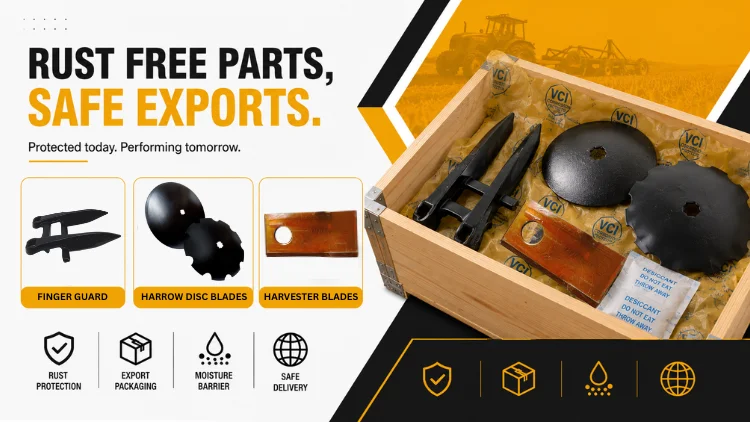
Agricultural machinery parts often travel thousands of miles before reaching distributors, dealers, OEMs, and end users. During international shipping, these components can be exposed to humidity, condensation, salt-laden air, and temperature fluctuations that may lead to rust and corrosion.
To prevent damage, manufacturers and exporters use specialized rust-protection methods, protective packaging, and quality-control procedures. These measures help ensure that machinery parts arrive in excellent condition and are ready for installation.
How Are Agricultural Machinery Parts Protected Against Rust During Export?
Agricultural machinery parts are protected against rust during export through a combination of anti-corrosion coatings, VCI packaging, moisture-barrier wrapping, desiccants, protective waxes, and export-grade packaging. These methods prevent moisture, condensation, and environmental exposure from damaging metal components during long-distance transportation and storage.
Why Agricultural Machinery Parts Rust During Export
Rust occurs when metal surfaces come into contact with moisture and oxygen for extended periods. During export, several factors can accelerate this process.
- Moisture and Humidity: High humidity levels can expose metal parts to moisture, increasing the risk of oxidation and corrosion.
- Temperature Changes: Temperature fluctuations inside shipping containers can create condensation, often called container rain, which settles on metal surfaces.
- Salt Exposure During Sea Freight: Ocean shipments are exposed to salty marine air that can significantly speed up corrosion.
- Long Transit and Storage Periods: Agricultural machinery parts may spend several weeks or months in transit, warehouses, or distribution centers before use.
Step-by-Step Rust Protection Process for Exported Agricultural Machinery Parts
Reliable exporters follow a systematic process to protect agricultural machinery parts from corrosion.
- Surface Cleaning: All components are cleaned to remove dirt, moisture, oil residues, and contaminants that may contribute to corrosion.
- Application of Anti-Corrosion Coating: Rust preventive oils, protective compounds, or corrosion inhibitors are applied to exposed metal surfaces.
- VCI Packaging: Parts are wrapped or packed using VCI (Volatile Corrosion Inhibitor) materials that provide additional corrosion protection.
- Placement of Desiccants: Moisture-absorbing desiccants are added inside packaging to control humidity levels.
- Moisture-Barrier Sealing: Products are sealed using moisture-resistant packaging materials to prevent external humidity from entering.
- Export Packaging: Parts are packed in export-grade cartons, pallets, or wooden crates suitable for international transportation.
- Final Inspection and Dispatch: Before shipment, packaging integrity and rust protection measures are verified through quality inspections.
Common Rust Protection Methods Used During Export
Anti-Corrosion Oils and Protective Coatings
Protective oils and coatings create a barrier between metal surfaces and moisture. They are commonly used for gears, shafts, bearings, and machined components.
VCI Packaging
VCI packaging releases corrosion-inhibiting molecules that form a protective layer on metal surfaces. Common VCI products include VCI bags, VCI films, VCI paper and VCI wraps. This method is widely used for precision-engineered agricultural machinery components.
Protective Wax Coatings
Wax coatings provide long-lasting protection for machinery parts that will be transported or stored for extended periods.
Surface Treatments and Finishes
Additional protection may be achieved through:
- Galvanization
- Zinc plating
- Powder coating
- Industrial paint finishes
These treatments improve corrosion resistance while increasing product durability.
Common Rust Protection Methods Compared
| Method | Protection Level | Best Used For |
| Anti-corrosion oil | Medium | Short to medium-term shipments |
| VCI packaging | High | Precision and machined components |
| Wax coating | Very High | Long-distance exports |
| Galvanization | Long-term | Structural metal components |
| Desiccants | Supplemental | Moisture control inside packaging |
In many cases, exporters combine multiple methods to achieve maximum protection.
How Export Packaging Helps Prevent Corrosion
Proper packaging is just as important as protective coatings.
- Moisture-Barrier Packaging: Materials such as aluminum barrier foil and multi-layer protective films help block external humidity.
- Desiccants: Silica gel and container desiccants absorb excess moisture and reduce condensation risks.
- Vacuum-Sealed Packaging: For high-value components, vacuum packaging minimizes air and moisture exposure during transit.
- Export-Grade Crates and Pallets: Strong export packaging protects machinery parts from environmental exposure and handling damage.
Agricultural Machinery Parts That Require Rust Protection
Many agricultural equipment components are particularly vulnerable to corrosion during export, including:
- Tractor transmission parts
- Rotavator blades
- Disc harrow components
- Cultivator tines
- Plough parts
- Gear housings
- Hydraulic assemblies
- Bearings and shafts
- Engine components
- Metal fabrication assemblies
Protecting these parts is essential to maintain performance and service life.
Container Protection Measures During International Shipping
In addition to product packaging, exporters also take steps to protect cargo inside shipping containers.
- Container Desiccants: Large desiccant units help absorb moisture throughout the shipping journey.
- Proper Loading Practices: Correct cargo placement improves airflow and minimizes condensation-related issues.
- Secure Cargo Handling: Proper securing methods prevent movement that could damage protective coatings or packaging materials.
What Importers Should Ask Their Agricultural Machinery Parts Supplier
Before placing an order, buyers should ask suppliers the following questions:
- Which rust protection method is used?
- Is VCI packaging included?
- Are desiccants placed inside the packaging?
- Is the packaging suitable for sea freight shipments?
- How long will the corrosion protection remain effective?
- Are export packaging inspections performed before dispatch?
These questions help ensure the products will arrive in good condition.
Conclusion
Protecting agricultural machinery parts against rust is a critical part of the export process. Exposure to humidity, condensation, salt air, and long transit periods can cause corrosion if proper preventive measures are not taken.
To minimize these risks, exporters use anti-corrosion coatings, VCI packaging, moisture-barrier materials, desiccants, protective surface treatments, and strict quality control procedures. By combining these methods, manufacturers can ensure agricultural machinery parts reach international customers safely, reliably, and ready for use.
FAQs
Rust is typically caused by moisture, humidity, condensation, salt exposure, and prolonged storage during transportation.
A combination of anti-corrosion coatings, VCI packaging, moisture-barrier materials, and desiccants provides the highest level of protection.
VCI packaging contains corrosion inhibitors that create a protective layer on metal surfaces and help prevent rust during shipping and storage.
Desiccants absorb moisture and reduce humidity levels inside packaging and shipping containers, helping prevent corrosion.
Yes. Condensation and humidity inside containers can cause corrosion if appropriate rust protection measures are not used.