 (+91) 842-700-1426
  agriparts@jcblmail.com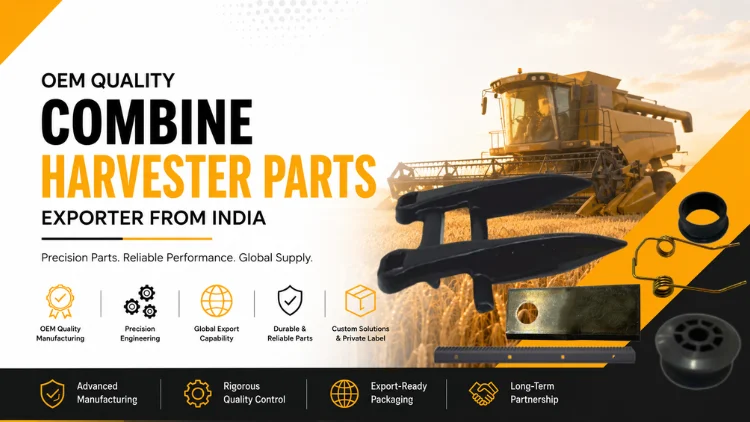
Global demand for high-performance combine harvester parts continues to grow as agricultural equipment manufacturers, distributors, and aftermarket suppliers seek dependable sourcing partners. Beyond competitive pricing, buyers prioritize consistent quality, precision manufacturing, and reliable export capabilities to minimize equipment downtime and maintain long-term performance. JCBL Agri is an Indian manufacturer and exporter of OEM-quality combine harvester parts, offering precision-engineered components for agricultural machinery. With advanced manufacturing capabilities and export-focused operations, the company supports OEMs, importers, wholesalers, and machinery brands with durable replacement parts designed for demanding field conditions. Why Choose an OEM Quality Combine Harvester Parts Exporter from India? India has become a preferred sourcing destination for OEM-quality combine harvester parts due to its strong manufacturing ecosystem, engineering expertise, cost-efficient production, and export-ready infrastructure. Reliable Indian manufacturers like JCBL Agri deliver precision-engineered components, consistent quality, customization capabilities, and dependable global supply for agricultural equipment businesses. Key advantages include: Why International Buyers Source Combine Harvester Parts from India India has established itself as a global manufacturing hub for agricultural machinery components. International buyers increasingly partner with Indian manufacturers because they offer the right balance of quality, scalability, and cost efficiency. Some of the major advantages include: For procurement teams, sourcing from India provides access to reliable manufacturing partners capable of maintaining consistent product quality and timely deliveries. OEM Combine Harvester Parts Manufactured by JCBL Agri JCBL Agri manufactures a comprehensive range of harvesteing replacement parts designed to meet OEM specifications and aftermarket requirements. The product portfolio includes precision-engineered components that support durability, accurate fitment, and reliable field performance. Cutting Components Efficient harvesting begins with precision cutting components. JCBL Agri manufactures: These components are engineered for accurate cutting performance and long service life under demanding harvesting conditions. Threshing Components The company also manufactures critical threshing parts, including: These components are designed for durability and consistent operational performance. Linkage Components JCBL Agri offers a wide range of linkage products, including: These products support secure equipment connections while maintaining dimensional accuracy and strength. Agricultural Hardware Components Additional product offerings include: Each product is manufactured to maintain reliable mechanical performance in demanding agricultural applications. Manufacturing Capabilities That Support OEM Quality Consistent product quality begins with robust manufacturing processes. JCBL Agri combines precision engineering with advanced production capabilities to manufacture components that meet customer specifications. Manufacturing strengths include: This integrated manufacturing approach enables consistent production quality while supporting OEM customization and repeatability across production batches. Quality Control That Builds Buyer Confidence Quality assurance is one of the most important considerations for international buyers. Reliable combine harvester parts must deliver consistent fitment, durability, and performance across every shipment. JCBL Agri follows structured quality control procedures throughout the manufacturing process, including: This systematic approach helps maintain product consistency while reducing the risk of installation issues and premature component failure. Export Capabilities for Global Agricultural Equipment Buyers Exporting agricultural machinery components requires more than manufacturing expertise. International buyers expect dependable documentation, secure packaging, and timely deliveries. JCBL Agri supports export requirements through the following: These capabilities help distributors, importers, and OEMs maintain uninterrupted inventory and supply chains. OEM & Custom Manufacturing Solutions Every agricultural machinery brand has unique product requirements. JCBL Agri supports OEM manufacturing by offering flexible production solutions tailored to customer specifications. Customization capabilities include: These services enable agricultural equipment companies to build their own branded product portfolios while partnering with an experienced manufacturing supplier. Industries Served JCBL Agri supplies combine harvester parts to a wide range of B2B customers, including the following: Its manufacturing capabilities support both recurring procurement programs and project-based supply requirements. Why Choose JCBL Agri as Your Combine Harvester Parts Export Partner? Selecting the right manufacturing partner involves evaluating product quality, production capabilities, consistency, and long-term reliability. JCBL Agri differentiates itself through: By combining engineering expertise with export-ready manufacturing, JCBL Agri helps customers build dependable agricultural equipment supply chains. How to Source Combine Harvester Parts from JCBL Agri Working with JCBL Agri follows a straightforward procurement process: Conclusion For agricultural equipment manufacturers and distributors, selecting the right supplier is critical to maintaining product quality and supply chain reliability. JCBL Agri combines precision manufacturing, OEM-focused production, rigorous quality control, and export expertise to deliver dependable combine harvester parts for global markets. Whether you require standard replacement components or custom-engineered OEM solutions, JCBL Agri offers the manufacturing capabilities and partnership approach needed to support your long-term sourcing requirements. FAQs