
 (+91) 842-700-1426
  agriparts@jcblmail.com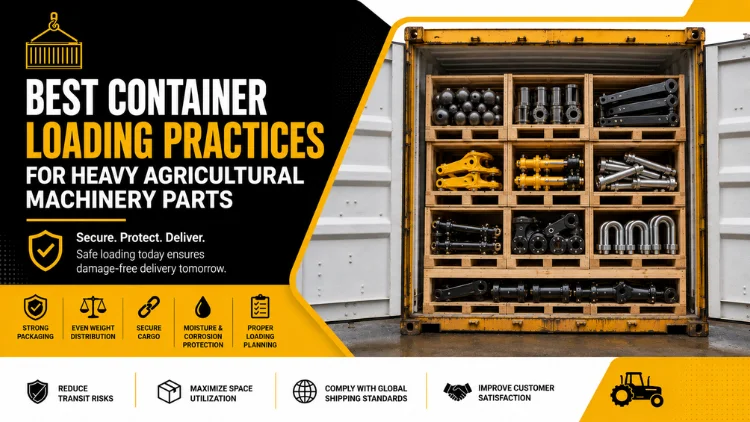
International buyers expect agricultural machinery parts to arrive in perfect condition, regardless of the distance traveled. However, transporting heavy components such as brake drums, hubs, axles, rotavator parts, cultivator components, transmission assemblies, and other machinery spare parts presents unique logistical challenges. Improper loading can lead to cargo movement, structural damage, corrosion, shipment delays, and increased transportation costs.
For exporters, distributors, and OEM suppliers, container loading is not simply about fitting products into available space. It is a critical process that directly impacts cargo safety, freight efficiency, compliance, and customer satisfaction.
This guide explains the best container loading practices for heavy agricultural machinery parts and how exporters can reduce transit risks while maximizing container utilization.
Why Container Loading Is Critical for Agricultural Machinery Parts
Agricultural machinery parts differ significantly from standard consumer goods. Many components are dense, heavy, irregularly shaped, and manufactured from metal materials that are susceptible to impact damage and corrosion.
During international transportation, cargo may be exposed to:
- Road vibrations
- Port handling operations
- Container stacking
- Ocean movement
- Long transit durations
- Temperature fluctuations
- Moisture and condensation
A properly loaded container helps prevent cargo shifting, protects valuable components, and ensures the shipment reaches its destination safely.
Best Container Loading Practices for Heavy Agricultural Machinery Parts
Proper container loading begins with evaluating the shipment. Before loading, assess the cargo weight, dimensions, handling requirements, and packaging needs. This helps create a safe and efficient loading plan while reducing the risk of damage during transit.
Choose the Right Container
Selecting the appropriate container improves cargo safety and space utilization.
- 20-Foot Containers: Suitable for dense and heavy parts such as axles, brake drums, hubs, and gear assemblies.
- 40-Foot Containers: Ideal for mixed shipments and bulk spare parts orders.
- Flat Rack Containers: Best for oversized machinery components that cannot fit in standard containers.
Inspect the Container
Always inspect the container before loading to ensure it is clean, dry, and structurally sound. Check for holes, water leakage, damaged flooring, faulty door seals, and signs of corrosion.
Use Strong Export Packaging
Heavy machinery parts should be protected with export-grade packaging.
- Palletization improves stability, handling, and weight distribution.
- Heavy-duty crates provide extra protection for precision or high-value components.
- Protective wrapping helps prevent scratches, contamination, and handling damage.
Distribute Weight Evenly
Proper weight distribution prevents cargo movement and container damage.
- Place the heaviest parts near the front wall.
- Spread weight evenly across the floor.
- Load heavy items at the bottom and lighter cargo above
Secure Cargo Properly
All cargo should be secured to prevent shifting during transportation.
Common securing methods include:
- Lashing straps
- Wooden blocking and bracing
- Dunnage bags and void fillers
Protect Against Moisture and Corrosion
Long-distance shipping can expose metal parts to humidity and condensation.
To prevent corrosion:
- Use desiccants to control moisture.
- Apply anti-rust coatings or corrosion inhibitors.
- Use VCI packaging for sensitive metal components.
Follow a Proper Loading Sequence
For better stability and easier unloading:
- Load heavy components first.
- Add medium-weight parts next.
- Place lightweight items on top or at the rear.
Maintain Accurate Documentation
Keep essential shipping records, including:
- Packing lists
- Commercial invoices
- Cargo weight details
- Loading reports
- Cargo securing records
Accurate documentation supports customs clearance, shipment tracking, and damage claims if required.
Common Container Loading Mistakes Exporters Should Avoid
Even experienced exporters can make mistakes that increase transportation risks. The most common issues include:
- Overloading the Container: Exceeding payload limits can create safety hazards and regulatory problems.
- Uneven Weight Distribution: Poor load balancing often causes cargo movement and structural stress.
- Insufficient Cargo Securing: Unsecured machinery parts are more likely to suffer impact damage during transport.
- Ignoring Moisture Control: Corrosion-related claims are often linked to inadequate humidity protection.
- Poor Packaging Quality: Weak pallets and inadequate packaging materials can fail under heavy loads.
Avoiding these mistakes helps maintain product integrity and improve shipment reliability.
Conclusion
Successful export logistics begins long before a container leaves the warehouse. For heavy agricultural machinery parts, proper container loading is essential for protecting cargo, controlling transportation costs, and maintaining customer confidence.
By focusing on cargo assessment, container selection, weight distribution, cargo securing, corrosion prevention, and final inspections, exporters can significantly reduce the risk of transit damage while improving operational efficiency.
As global demand for agricultural machinery components continues to grow, companies that implement professional container loading practices will be better positioned to deliver reliable shipments, minimize claims, and build long-term relationships with international buyers.
FAQs
Proper weight distribution is the most important factor. Heavy components should be evenly distributed and securely positioned to prevent cargo movement, container damage, and transportation risks.
Heavy machinery parts can be secured using lashing straps, wooden blocking and bracing, and dunnage bags. These methods help prevent shifting during road, rail, and ocean transport.
Exporters use desiccants, anti-rust coatings, corrosion inhibitors, and VCI packaging to protect metal components from moisture and corrosion during transit.
A 20-foot container is typically preferred for heavy machinery parts because it can handle dense cargo more efficiently while staying within weight limits.
Container inspection helps identify issues such as holes, leaks, damaged flooring, or faulty door seals that could expose cargo to moisture, contamination, or physical damage during transportation.