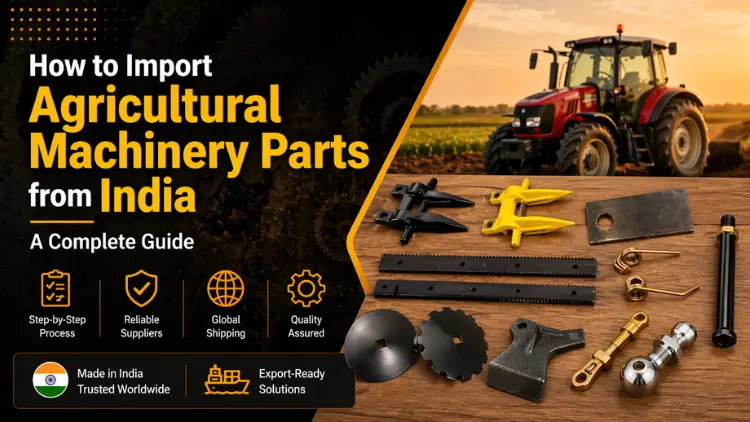
How to Import Agricultural Machinery Parts from India: A Complete Guide

You can import agricultural machinery parts from India by following a step-by-step process: Define requirements → Find suppliers → Verify credibility → Test samples → Check regulations → Negotiate terms → Arrange shipping → Clear customs. India has become one of the most reliable sourcing destinations for agricultural machinery parts, supplying to markets across Africa, Europe, the Middle East, and North America. With strong manufacturing capabilities, competitive pricing, and growing export experience, Indian suppliers are increasingly preferred by global importers and distributors. If you’re planning to source from India, this guide will walk you through the complete import process, step by step, along with practical tips to avoid common risks.. Key Takeaways What Is the Process to Import Agricultural Machinery Parts from India? Importing agricultural machinery parts from India involves identifying the right supplier, verifying product quality, understanding import regulations, negotiating pricing and shipping terms, and completing logistics and customs clearance. Why Import Agricultural Machinery Parts from India? India offers a strong value proposition for B2B buyers looking for quality and cost efficiency. Key Reasons: For importers, this means better margins, scalable supply, and flexible manufacturing options. Step-by-Step Process to Import Agricultural Machinery Parts from India Step 1: Define Your Product Requirements Start by clearly identifying what you need: A clear requirement helps suppliers provide accurate quotes and reduces errors later. Step 2: Find Reliable Suppliers in India You can source suppliers through: What to Look For: Shortlist at least 2–3 suppliers to compare quality and pricing. Step 3: Verify Supplier Credibility Before placing any order, validate the supplier: For large orders, consider using a third-party inspection agency. You can also verify exporters through organizations like the Engineering Export Promotion Council of India (EEPC), which lists credible export-oriented manufacturers. Step 4: Request Samples and Check Quality Always test samples before bulk purchasing: This step helps you avoid costly mistakes and ensures the product meets your standards. Step 5: Understand Import Regulations in Your Country Import rules vary depending on your country. You should check: Tip: Consult a customs broker or import expert in your country to avoid compliance issues. Step 6: Negotiate Pricing and Payment Terms Once you finalize a supplier, discuss: Common Payment Methods: Also, clearly define Incoterms: Incoterm What It Means Best For FOB (Free on Board) Supplier handles till port Experienced importers CIF (Cost, Insurance, Freight) Supplier handles shipping + insurance First-time importers EXW (Ex Works) Buyer handles everything Advanced buyers Pro Tip: If you are a first-time importer, choosing CIF (Cost, Insurance, Freight) is usually safer. The supplier manages shipping and insurance, reducing your logistical complexity. Step 7: Arrange Shipping and Logistics Choose a shipping method based on urgency and cost: Work with: Proper logistics planning ensures timely delivery and cost control. Step 8: Prepare Documentation and Clear Customs Accurate documentation is critical for smooth import clearance. Key Documents: Once goods arrive: Cost Breakdown of Importing from India Cost Category Typical Components Who Pays? (FOB) Sourcing Cost Unit price + export packaging Buyer Inland Logistics Factory to port + port loading Supplier Freight & Insurance Ocean/air freight + transit insurance Buyer Landing Costs Import duty + VAT/GST + terminal handling Buyer Import Regulations & Compliance Considerations Different countries have different compliance requirements. You May Need: Failing to meet compliance standards can result in delays or shipment rejection. Understanding HS Codes for Agricultural Machinery Parts Agricultural machinery parts are typically classified under HS Code Chapter 84, which covers machinery, mechanical appliances, and related components. Correct HS Code classification is important because it determines the following: Always confirm the exact HS Code with your customs broker to avoid delays or penalties. How to Choose the Right Supplier in India Selecting the right partner is critical for long-term success. Supplier Checklist: A reliable supplier is not just a vendor, they are a long-term business partner. OEM vs Aftermarket Parts: What Should You Import? OEM Parts: Aftermarket Parts: Choose based on your target market and business model. Common Challenges in Importing (and How to Avoid Them) 1. Quality Issues: Products may not meet your expectations.=>Solution: Always test samples and verify the supplier before placing bulk orders.2. Shipping Delays: Deliveries can take longer than expected.=>Solution: Work with experienced exporters and agree on clear timelines in advance.3. Hidden Costs: Unexpected charges can increase your total cost.=>Solution: Clearly define Incoterms and confirm all costs upfront.4. Communication Gaps: Miscommunication can lead to errors or delays.=>Solution: Choose suppliers with professional export teams and clear communication processes. Pro Tips for First-Time Importers Conclusion Importing agricultural machinery parts from India is a strategic and cost-effective decision for B2B buyers. With the right supplier, clear processes, and proper planning, you can build a reliable and scalable supply chain. The key to success lies in supplier verification, quality control, and understanding import regulations. When done correctly, importing from India can give your business a strong competitive advantage in the global market. FAQs

Quality Testing Standards for Agricultural Machinery Components: Complete Compliance & Testing Guide

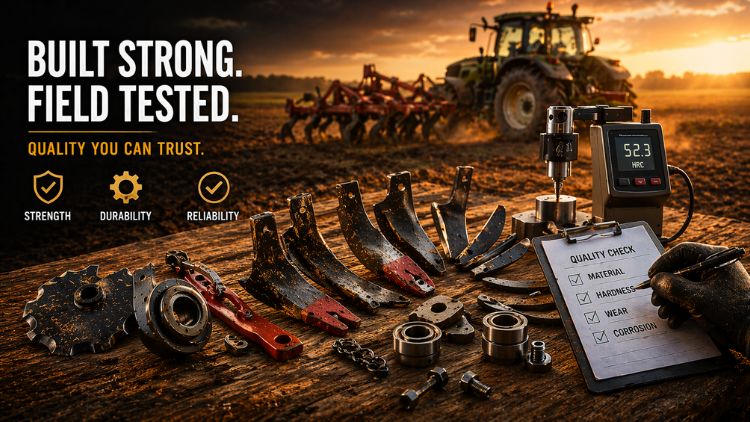
Agricultural machinery components operate under extreme conditions, including constant soil abrasion, heavy loads, vibration, moisture exposure, and long working hours. Unlike controlled industrial environments, farm conditions are unpredictable, making component reliability essential for consistent performance. Even a single component failure, such as a worn-out rotavator blade, a cracked cultivator tine, or a corroded fastener, can disrupt operations, increase downtime, and lead to significant productivity and financial losses. Quality testing standards for agricultural machinery components ensure that parts are tested for strength, durability, and performance, helping manufacturers deliver reliable components that perform consistently in real-world field conditions. What Are Quality Testing Standards for Agricultural Machinery Components? Quality testing standards are defined frameworks such as ISO, BIS, and ASTM that specify how agricultural machinery components should be tested for mechanical strength, material composition, environmental resistance, and performance reliability using standardized procedures and measurable parameters. Why are quality testing standards important in agricultural machinery? Quality testing standards are important because they ensure components can withstand mechanical stress, soil abrasion, and environmental exposure, reducing failure risk and improving reliability, safety, and long-term performance in field conditions. In agricultural applications, failure is often not gradual; it is sudden and operationally disruptive. Quality testing helps manufacturers and buyers ensure the following: From a B2B perspective, testing is not just quality control; it is a risk management tool for both manufacturers and buyers. Key Quality Testing Standards for Agricultural Machinery Components Understanding how standards apply at a practical level is essential for building credibility. ISO Standards (System & Safety Level) ISO standards ensure that quality is built into the process, not just checked at the end. BIS Standards (Indian Regulatory Framework) Essential for domestic market access and institutional buyers. ASTM Standards (Testing Methodology Level) ASTM does not define what to achieve; it defines how to test it. Examples: These standards ensure repeatability and comparability of test results across manufacturers. OECD & CE Certifications (Performance & Export Readiness) Standards Mapping Table Standard Level What It Controls Example Application ISO System Quality processes Manufacturing control BIS Regulatory Minimum compliance Indian market ASTM Testing Test methods Material validation OECD/CE Performance Field validation Export What are the main types of testing for agricultural machinery components? The main types of testing include mechanical testing, abrasion testing, chemical testing, environmental testing, and performance testing, each designed to evaluate strength, wear resistance, material integrity, and real-world functionality. 1. Mechanical Testing (Core Structural Reliability) Mechanical testing evaluates how a component behaves under physical stress, helping manufacturers ensure that parts can withstand load, pressure, and repeated operational forces without failure. Key parameters typically evaluated include: For example, a cultivator tine experiences continuous bending during field operations. Fatigue testing ensures it can endure thousands of stress cycles without cracking or deforming prematurely. 2. Abrasion & Wear Testing (Critical for Soil-Engaging Parts) Abrasion and wear testing measure how quickly a material degrades when exposed to friction, which is especially critical for components that directly interact with soil and abrasive particles. Key measurements include the following: For instance, rotavator blades are tested using standardized abrasion methods to simulate soil contact, helping estimate their wear rate and operational lifespan in real farming environments. 3. Chemical & Metallurgical Testing Chemical and metallurgical testing ensures that the material composition and internal structure meet required specifications, which directly affect strength, durability, and resistance to environmental damage. Key parameters evaluated include the following: These tests are critical because even minor variations in material composition can lead to premature failure, reduced wear resistance, or inconsistent performance across batches. 4. Environmental Testing (Field Condition Simulation) Environmental testing simulates real-world agricultural conditions to evaluate how components perform under exposure to moisture, temperature changes, dust, and other environmental factors over time. Key parameters assessed include the following: This testing is especially important for externally exposed components, where environmental degradation can significantly reduce service life and reliability. 5. Performance Testing (Functional Validation) Performance testing verifies whether a component performs as intended under actual working conditions, ensuring it delivers consistent results when subjected to operational loads and stress. Key parameters evaluated include the following: This type of testing connects laboratory validation with real-world application, ensuring that components meet both design expectations and practical performance requirements. Quality Testing Overview Test Type Key Parameter Why It Matters Mechanical Strength & fatigue Prevents breakage Abrasion Wear resistance Extends life of blades Chemical Material composition Ensures consistency Environmental Corrosion resistance Prevents degradation Performance Load handling Ensures functionality Material-Based Testing Requirements for Key Components Material-based testing ensures that each agricultural machinery component is evaluated according to its material properties and real-world application. Different materials, such as steel, rubber, and coated surfaces, require specific testing methods to ensure durability, strength, and resistance to field conditions. Steel Components (Blades, Tines, Discs, Shafts) Steel components are widely used in agricultural machinery because they handle heavy loads, repeated stress, and continuous soil contact. Their performance depends not only on material grade but also on proper heat treatment and processing. To ensure reliability, testing focuses on achieving the right balance between hardness and toughness, as overly hard components may crack while softer ones wear out quickly. Key parameters tested: Incorrect heat treatment is a common failure point, leading to brittle fractures or excessive wear, especially in high-load or high-friction applications. In many real-world cases, improper hardness levels in blades and tines lead to faster wear or sudden breakage. Components that are too hard may crack under impact, while softer ones wear out quickly in abrasive soil conditions. Soil-Engaging Components (High Wear Zone) Soil-engaging components operate in direct contact with soil, making them highly susceptible to abrasion, impact, and continuous friction. Their durability directly affects field efficiency and maintenance frequency. These include rotavator blades, plough shares, and disc harrow discs, which require enhanced wear resistance to maintain performance over time. Key parameters tested: Since these components face constant wear, improved testing can significantly extend service life and reduce replacement costs. Rubber & Polymer Components Rubber and polymer components are used in seals, bushes, and flexible connections where elasticity and environmental… Continue reading Quality Testing Standards for Agricultural Machinery Components: Complete Compliance & Testing Guide