
 (+91) 842-700-1426
  agriparts@jcblmail.com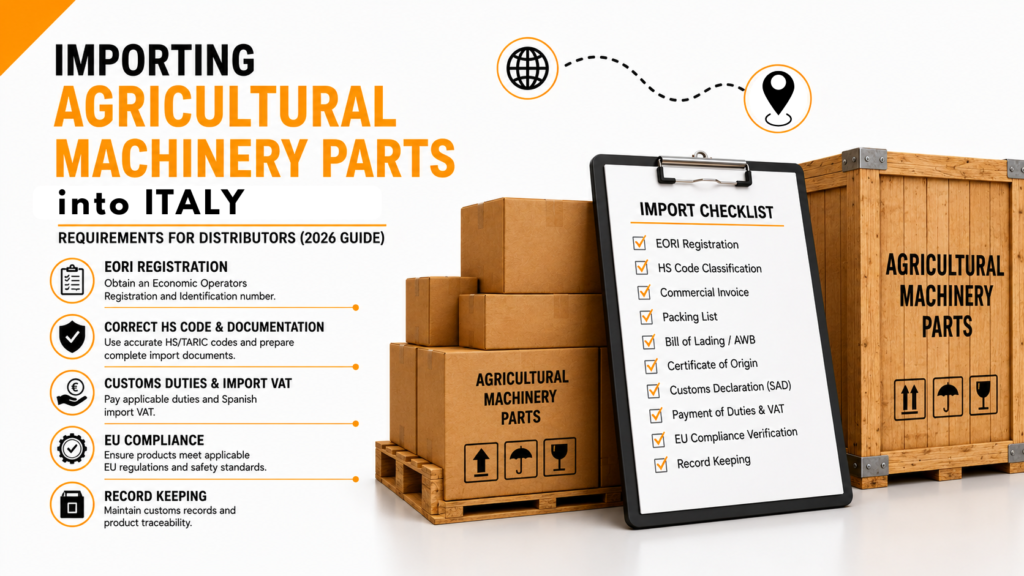
Italy is one of Europe’s leading agricultural economies, with a well-established market for tractors, harvesting equipment, irrigation systems, and other farm machinery. As equipment ages and maintenance needs increase, businesses continue to source reliable agricultural machinery parts from global suppliers to support repairs, servicing, and OEM production.
For importers, distributors, and procurement teams, successful importing goes beyond finding competitive prices. Understanding EU import requirements, preparing accurate documentation, selecting dependable manufacturers, and maintaining consistent product quality are all essential for smooth cross-border trade.
This blog explains the key considerations for importing agricultural machinery parts into Italy while helping businesses reduce risks throughout the procurement process.
Why Italy Is an Attractive Market for Agricultural Machinery Parts
Italy has a diverse agricultural sector that relies on modern machinery for crop cultivation, harvesting, irrigation, and land management. Regular equipment maintenance creates ongoing demand for replacement parts across both OEM and aftermarket channels.
For international suppliers, Italy offers opportunities to work with:
- Agricultural equipment distributors
- Farm machinery dealers
- OEM manufacturers
- Industrial importers
- Agricultural service providers
Businesses that prioritize consistent quality, timely deliveries, and regulatory compliance are generally better positioned to build long-term partnerships in the Italian market.
Key Import Requirements for Italy
Understanding Italy’s import process helps businesses avoid unnecessary customs delays and compliance issues.
1. Classify Products Using the Correct HS Code
Every imported product must be classified under the appropriate Harmonized System (HS) code. The correct classification determines applicable customs duties, VAT, and any regulatory requirements.
Incorrect HS codes may result in customs delays, additional inspections, or unexpected costs.
2. Prepare Complete Import Documentation
Accurate documentation is essential for customs clearance. Commonly required documents include:
- Commercial Invoice
- Packing List
- Bill of Lading or Air Waybill
- Certificate of Origin (when applicable)
- Import declarations and other documents required by customs authorities
Before shipment, verify documentation requirements with your customs broker or freight forwarder.
3. Understand Import Duties and VAT
Agricultural machinery parts imported into Italy may be subject to customs duties and Italian VAT. The applicable rates depend on factors such as the product classification and country of origin.
Review the relevant tariff information before placing an order to estimate the total landed cost accurately.
4. Verify Applicable EU Product Requirements
Compliance requirements vary depending on the type of agricultural machinery part being imported. Certain products may need to meet applicable European Union regulations, technical standards, or documentation requirements before entering the market.
Importers should confirm the requirements applicable to their specific products before shipment.
Step-by-Step Process for Importing Agricultural Machinery Parts into Italy
Following a structured import process helps reduce operational risks and improves supply chain efficiency.
Step 1: Define Product Specifications
Clearly document technical drawings, material grades, dimensions, tolerances, and performance requirements before requesting quotations.
Step 2: Evaluate Potential Suppliers
Assess manufacturers based on:
- Manufacturing experience
- Production capabilities
- Export experience
- Quality management practices
- Communication responsiveness
Step 3: Request Product Samples
Testing samples allows buyers to verify product quality and compatibility before committing to larger purchase volumes.
Step 4: Confirm Pricing and Commercial Terms
Review quotations carefully, including lead times, payment terms, Incoterms, packaging specifications, and warranty policies.
Step 5: Arrange Production and Quality Inspection
Many importers conduct inspections before shipment to confirm that products meet agreed specifications and quality requirements.
Step 6: Organize Shipping and Customs Clearance
Coordinate with experienced logistics providers and customs brokers to ensure documentation is complete and shipments move efficiently through customs.
How to Choose a Reliable Agricultural Machinery Parts Supplier
Selecting the right supplier can significantly influence product quality, delivery performance, and long-term procurement success.
Consider the following factors during supplier evaluation:
- Manufacturing Experience: Choose suppliers with proven expertise in producing agricultural machinery components and serving international B2B customers.
- Quality Management Systems: Ask whether the manufacturer follows recognized quality management processes and maintains consistent production standards.
- Production Capacity: Ensure the supplier can support your expected order volumes without compromising lead times or product consistency.
- Technical Capabilities: Suppliers should be able to manufacture according to engineering drawings, technical specifications, or OEM requirements when applicable.
- Export Experience: Manufacturers familiar with European exports are often better prepared to manage documentation, packaging, and international logistics.
Common Challenges When Importing Agricultural Machinery Parts
Although international sourcing offers many advantages, importers may encounter operational challenges.
- Documentation Errors: Incomplete or inaccurate paperwork can delay customs clearance. Always verify all shipping documents before dispatch.
- Product Quality Variations: Differences between approved samples and production batches may lead to quality concerns. Conduct pre-shipment inspections and establish clear quality specifications.
- Shipping Delays: Production issues, port congestion, or logistics disruptions can affect delivery schedules. Build realistic lead times into procurement planning and maintain regular communication with suppliers.
- Incorrect Product Specifications: Miscommunication regarding dimensions, materials, or tolerances may result in unsuitable products. Share detailed technical drawings and confirm specifications before production begins.
Questions to Ask Before Placing an Order
Before selecting a supplier, consider asking:
- Can you manufacture according to our technical specifications?
- What quality inspections are performed during production?
- What materials are used for manufacturing?
- Can you provide inspection or test reports?
- What are your standard production lead times?
- What packaging methods do you use for export shipments?
- Have you previously supplied customers in Europe?
- How do you manage quality consistency across production batches?
These questions can help buyers evaluate supplier capabilities and reduce procurement risks.
Why Quality Control Is Essential
Consistent quality is critical for minimizing returns, avoiding operational downtime, and maintaining customer satisfaction.
Many B2B importers include quality inspections at different production stages, such as:
- Raw material verification
- Dimensional inspection
- Functional testing (where applicable)
- Surface finish inspection
- Packaging inspection
- Final pre-shipment inspection
A structured quality control process helps identify potential issues before products leave the factory.
Shipping Considerations for Italy
Efficient logistics planning contributes to reliable deliveries and lower import costs.
When arranging shipments, businesses should consider:
- Appropriate transport mode based on delivery timelines
- Protective export packaging
- Agreed Incoterms
- Customs brokerage support
- Transit insurance when appropriate
Working with experienced logistics partners can simplify customs procedures and improve shipment visibility.
Conclusion
Importing agricultural machinery parts into Italy requires more than competitive pricing. Businesses should understand applicable import requirements, prepare accurate documentation, evaluate supplier capabilities, implement quality control measures, and plan logistics carefully.
A structured procurement process helps reduce supply chain risks while supporting consistent product quality and reliable deliveries. For B2B importers, building long-term relationships with dependable manufacturing partners can contribute to smoother operations and greater purchasing confidence in the Italian market.
FAQs
Common documents include a commercial invoice, packing list, bill of lading or air waybill, and other customs documents required for the specific shipment.
Requirements depend on the product type. Importers should verify any applicable EU regulations, technical standards, or documentation before importing.
Evaluate manufacturers based on production capability, quality management systems, export experience, technical expertise, and consistent communication.
The HS code determines customs duties, VAT, and regulatory requirements. Incorrect classification may lead to delays or additional costs.
Working with experienced suppliers, confirming technical specifications, conducting quality inspections, preparing accurate documentation, and planning logistics carefully can help reduce procurement risks.