
 (+91) 842-700-1426
  agriparts@jcblmail.com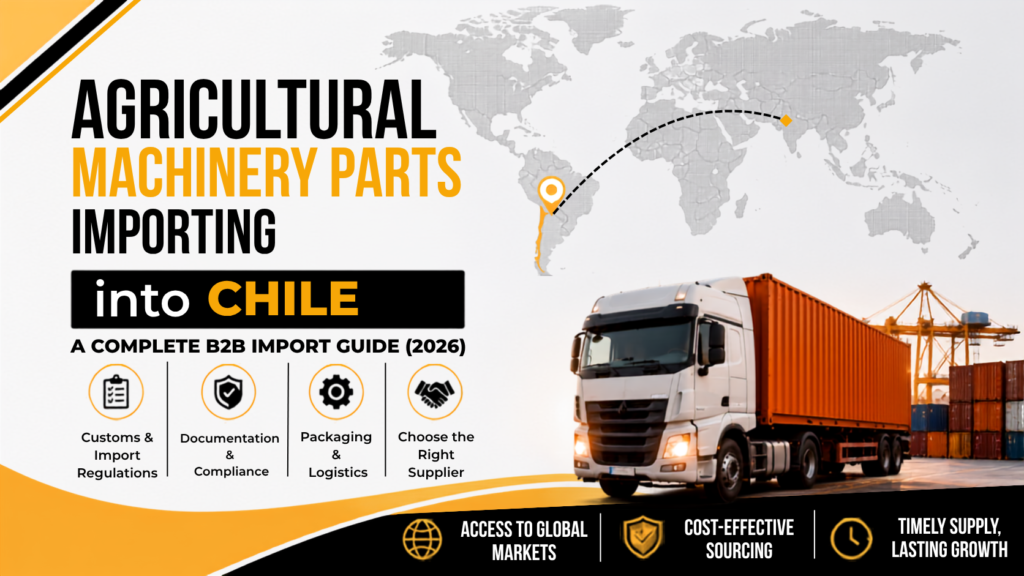
Importing agricultural machinery parts into Chile requires more than selecting a supplier and arranging shipment. Chilean importers, distributors, machinery dealers, and agricultural-equipment businesses need to verify product classification, applicable customs and SAG requirements, documentation, packaging, freight, and total landed cost before the parts are shipped.
This guide explains how to import agricultural machinery parts into Chile, from selecting the right part and supplier to customs clearance and final delivery.
Chile Agricultural Machinery Parts Import Requirement: Overview
| Requirement | What B2B importers should check |
| Product classification | Correct HS/tariff code |
| Customs | Applicable duties, VAT and tariff treatment |
| SAG | Requirements for regulated products and applicable used machinery/parts |
| Packaging | ISPM 15 requirements for regulated wooden packaging |
| Documentation | Invoice, packing list, transport and applicable regulatory documents |
| Origin | Country of origin and eligibility for preferential treatment |
| Logistics | Freight, insurance, port handling and inland delivery |
Checking these requirements before placing the order can help reduce avoidable customs delays and unexpected import costs.
How to Import Agricultural Machinery Parts into Chile
To import agricultural machinery parts into Chile, buyers should follow a structured process: identify and classify the part, verify Chilean Customs and SAG requirements, calculate the landed cost, select a qualified supplier, prepare import documents, confirm packaging compliance, and arrange freight and customs clearance.
1. Identify and Classify the Agricultural Machinery Part
Begin with an accurate product description and determine the correct HS code before placing an order. Classification should be based on the actual characteristics and function of the part, not simply the agricultural machine in which it is used.
Before requesting a quotation, record:
- Part name and part number
- Machinery make and model
- Application and function
- Material and technical specifications
- New or used condition
- Country of origin
- Dimensions and weight
The HS classification can affect applicable tariffs and import requirements in Chile. If the classification is unclear, verify it before shipment instead of relying on a generic supplier description.
2. Check Chilean Customs and SAG Requirements
Before importing, determine whether the specific product is subject to requirements from Chile’s Servicio Agrícola y Ganadero (SAG) or other authorities.
Do all agricultural machinery parts require SAG approval? No. Requirements depend on the product, condition, materials, origin, and potential phytosanitary risk.
Used agricultural machinery, equipment, implements and applicable parts require particular attention. Chilean SAG requirements address phytosanitary risks associated with these imports, including requirements for covered used machinery to arrive free of soil, plant residues and regulated pests.
Importers should check the applicable SAG requirements before shipment, especially when importing used agricultural machinery parts. SAG also maintains specific requirements for regulated agricultural products and import-related phytosanitary procedures, so requirements should be verified for the actual product rather than inferred from its agricultural use.
3. Calculate Import Duties, Taxes and Landed Cost
The supplier’s quoted price is only one component of the total import cost.
Landed cost = Product price + international freight + insurance + applicable duties and taxes + customs/port charges + applicable inspection costs + inland delivery.
The applicable tariff depends on the product’s classification. Chilean importers may also qualify for preferential tariff treatment under a relevant trade agreement when the product meets the applicable rules of origin and documentation requirements.
Therefore, do not assume that tractor parts, combine harvester components, and other agricultural equipment spares have identical tariff treatment. Confirm the classification and applicable rate for each product.
4. Select a Qualified Agricultural Machinery Parts Supplier
For B2B buyers, the lowest unit price does not necessarily mean the lowest total sourcing cost. Evaluate the supplier’s ability to deliver consistent quality, documentation and specifications.
Before placing a purchase order, verify:
- Manufacturing capabilities
- OEM or aftermarket experience
- Part-number accuracy
- Material and dimensional specifications
- Quality-control procedures
- Product inspection practices
- Export packaging standards
- Documentation capability
- Production capacity
- Lead times and delivery reliability
For recurring imports, supplier consistency is particularly important. Stable specifications and quality across repeat orders can help distributors, dealers and machinery businesses reduce mismatched parts and quality-related issues.
5. Prepare the Required Import Documents
Import documents should accurately describe the shipment and contain consistent product information.
Common documents include:
| Document | Purpose |
| Commercial invoice | Identifies the buyer, seller, products, quantities, and transaction value |
| Packing list | Provides package contents, quantities, weights and dimensions |
| Bill of lading / airway bill | Records shipment and transportation details |
| Certificate of origin | May support preferential tariff treatment when applicable |
| Technical documents | Help establish product identity and specifications |
| Regulatory documents | Required when applicable to the product |
| Customs documentation | Supports customs declaration and clearance |
Chile’s customs procedures use commercial and transport documentation as part of the import process.
Before dispatch, check that the part numbers, descriptions, quantities, values and country-of-origin information are consistent across the applicable documents.
6. Confirm Packaging Compliance Before Shipment
Packaging is another important consideration when importing machinery parts into Chile.
If the shipment uses regulated wooden pallets, crates, dunnage or other wooden packaging, check the applicable ISPM 15/NIMF 15 requirements. SAG establishes requirements for wooden packaging used with imported goods, including the applicable international mark.
Confirm packaging compliance with the supplier before dispatch, particularly when parts are packed in wooden crates or shipped on wooden pallets.
7. Arrange Freight and Customs Clearance
Choose the shipping method according to shipment size, urgency, value, and total landed cost.
- Sea freight: Generally suitable for larger or less time-sensitive B2B shipments.
- Air freight: Can be considered for urgent, high-value, or relatively lightweight parts.
Before shipment, the importer should coordinate with the freight forwarder and customs representative to ensure that:
- Shipping documents are complete
- Product descriptions match the commercial documents
- Required customs information is available
- Applicable duties and taxes have been calculated
- SAG or other inspection requirements have been checked where applicable
After arrival in Chile, the shipment goes through the applicable customs clearance process. Depending on the product and its regulatory status, additional inspections or procedures may be required.
The key to a smooth import is to complete classification and regulatory and documentation checks before the shipment leaves the supplier.
Common Mistakes When Importing Agricultural Machinery Parts into Chile
- Using the wrong HS code: Incorrect classification can affect tariff treatment and applicable import requirements.
- Shipping used parts without checking SAG requirements: Used agricultural machinery and covered parts may have specific phytosanitary requirements.
- Ignoring wooden packaging requirements: Non-compliant wooden packaging can result in additional measures and delays.
- Selecting a supplier based only on price: A low unit price may become expensive when quality problems, poor packaging or unreliable delivery are considered.
- Sending inconsistent documentation: Differences in part numbers, quantities, values or descriptions can complicate customs processing.
- Calculating product price instead of landed cost: Import decisions should account for the complete cost of getting the parts to the buyer in Chile.
Conclusion
Successful agricultural machinery parts importing into Chile starts before the shipment leaves the supplier. B2B buyers should verify the correct classification, applicable SAG and customs requirements, documentation, packaging, supplier capability and total landed cost before confirming an order.
For Chilean agricultural machinery importers, distributors and dealers, a reliable sourcing strategy is not simply about finding the lowest price. It is about securing the right specifications, consistent quality, compliant documentation and predictable landed cost across every shipment.
FAQs
Yes. Agricultural machinery parts can be imported into Chile, provided the importer complies with applicable customs, tariff, documentation and, where relevant, SAG requirements. Requirements can vary according to the product, condition, origin and classification.
Not necessarily. SAG requirements depend on the specific product and its phytosanitary risk. Used agricultural machinery, equipment and applicable parts require particular attention because Chile has specific requirements concerning soil, plant residues and regulated pests.
Common documents include a commercial invoice, packing list, bill of lading or airway bill, and customs documentation. A certificate of origin, technical documents, or regulatory documents may also be required depending on the product and applicable trade or import requirements.
Agricultural machinery parts are classified using the applicable HS/tariff code based on the product’s characteristics and function. The correct classification can affect customs duties, tariff preferences, and regulatory requirements, so it should be verified before shipment.
Before ordering, verify the HS code, applicable Customs and SAG requirements, supplier specifications, country of origin, import documents, packaging compliance, freight arrangements, and total landed cost. Checking these factors before shipment can help reduce delays and unexpected import costs.