
 (+91) 842-700-1426
  agriparts@jcblmail.com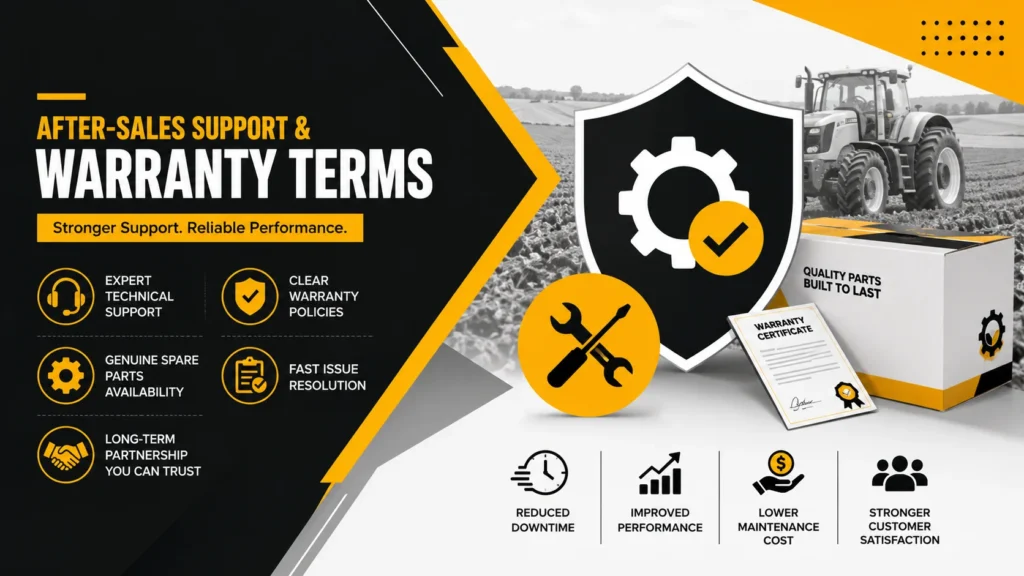
Agricultural machinery operates in demanding environments where equipment failure can lead to costly downtime and delayed farm operations. For international buyers sourcing agricultural machinery parts, product quality alone is not enough. Reliable after-sales support and transparent warranty terms are equally important when choosing an exporter.
Whether you’re importing tractor parts, tillage equipment components, harvesting machinery parts, or irrigation system components, understanding an exporter’s post-sales services can help reduce risks and improve long-term operational efficiency.
This guide explains what after-sales support includes, what warranty terms buyers should evaluate, and why choosing an experienced agricultural machinery parts exporter in India can strengthen your supply chain.
Why After-Sales Support Matters in Agricultural Machinery Parts Exports
After-sales support refers to the services an exporter provides after delivering agricultural machinery parts, including technical assistance, warranty services, spare parts availability, and customer support.
Strong after-sales support helps international buyers:
- Minimize equipment downtime
- Resolve technical issues faster
- Improve machinery performance
- Reduce maintenance costs
- Build long-term supplier relationships
- Increase confidence in future purchases
For exporters, effective after-sales service demonstrates commitment to customer satisfaction and strengthens their reputation in global markets.
What Does After-Sales Support Include?
Reliable exporters provide comprehensive post-sales services that help customers maximize the lifespan and performance of agricultural machinery parts.
Technical Assistance
Technical support ensures buyers receive guidance when installing, operating, or maintaining machinery parts. It may include:
- Installation guidance
- Troubleshooting assistance
- Maintenance recommendations
- Product usage support
Prompt technical assistance helps prevent operational delays and unnecessary equipment failures.
Spare Parts Availability
Agricultural operations often depend on quick access to replacement components. A dependable exporter should maintain a consistent supply of genuine spare parts to reduce downtime and simplify maintenance.
Customer Support
Dedicated customer support enables buyers to resolve product-related concerns efficiently through email, phone, or digital communication channels. Fast response times contribute to smoother business operations and stronger customer relationships.
Product Documentation
Comprehensive documentation helps buyers correctly install and maintain machinery components. Useful documents include:
- Product specifications
- Installation manuals
- Maintenance guides
- Warranty certificates
- Inspection reports where applicable
Understanding Warranty Terms for Agricultural Machinery Parts
A clear warranty policy protects both buyers and exporters by defining responsibilities and claim procedures.
Warranty Coverage
Most warranty policies cover defects resulting from:
- Manufacturing defects
- Material defects
- Workmanship issues
Coverage varies depending on the product category and manufacturer, so buyers should review warranty documents before placing bulk orders.
Warranty Duration
Warranty periods differ based on the machinery part and intended application. Exporters typically specify the warranty period in purchase agreements or product documentation.
Warranty Exclusions
Warranty protection generally does not apply to issues caused by:
- Improper installation
- Unauthorized repairs or modifications
- Normal wear and tear
- Incorrect usage
- Accidental damage
- Poor storage or maintenance
Understanding these exclusions helps prevent misunderstandings during warranty claims.
Warranty Claim Process
A transparent claim process should clearly outline:
- How to report a product issue
- Required documents (invoice, product details, photographs, etc.)
- Inspection or verification procedure
- Resolution timeline
- Repair or replacement policy
Simple and well-documented procedures reduce claim delays and improve customer satisfaction.
What International Buyers Should Evaluate Before Choosing an Exporter
Before selecting an agricultural machinery parts exporter, buyers should verify more than product specifications.
Consider the following factors:
| Evaluation Factor | Why It Matters |
| Written warranty policy | Defines buyer protection |
| Technical support | Enables faster issue resolution |
| Spare parts availability | Minimizes operational downtime |
| Quality control process | Improves product reliability |
| Response time | Ensures prompt customer assistance |
| Export experience | Demonstrates market expertise |
| Product documentation | Supports installation and maintenance |
| Certifications | Reflects commitment to quality standards |
Choosing an exporter that offers both quality products and dependable post-sales support helps reduce long-term operational risks.
Best Practices Followed by Reliable Agricultural Machinery Parts Exporters
Leading exporters adopt structured after-sales processes to improve customer experience and maintain long-term business relationships.
Best practices include:
- Providing clear warranty documentation
- Performing comprehensive quality inspections before shipment
- Offering responsive technical support
- Maintaining spare parts inventory
- Communicating proactively throughout the support process
- Recording warranty claims for continuous improvement
- Delivering accurate product documentation
These practices enhance buyer confidence and contribute to reliable international trade partnerships.
Common Warranty Challenges and How to Avoid Them
International trade involves multiple stakeholders, making clear communication essential.
Some common challenges include:
| Challenge | Best Practice |
| Unclear warranty terms | Review written warranty documents before ordering |
| Missing documentation | Maintain invoices and shipment records |
| Delayed warranty claims | Report issues promptly after discovery |
| Shipping damage confusion | Inspect shipments immediately upon delivery |
| Installation-related failures | Follow manufacturer installation guidelines |
Establishing expectations before shipment reduces disputes and simplifies claim resolution.
Why Indian Agricultural Machinery Parts Exporters Are Trusted Globally
India has become a preferred sourcing destination for agricultural machinery components due to its growing manufacturing capabilities, skilled workforce, and competitive production costs.
Many Indian exporters focus on:
- International quality standards
- Modern manufacturing facilities
- Consistent product quality
- Export documentation support
- Global logistics capabilities
- Responsive after-sales service
For overseas buyers, partnering with an experienced agricultural machinery parts exporter in India can provide access to quality products supported by reliable customer service and long-term technical assistance.
How to Choose an Agricultural Machinery Parts Exporter
When evaluating potential suppliers, look beyond pricing.
A reliable exporter should demonstrate the following:
- Transparent warranty policies
- Strong quality assurance processes
- Technical expertise
- Consistent spare parts availability
- Efficient communication
- Proven export experience
- Positive customer feedback
- Commitment to long-term support
Selecting a supplier with robust after-sales service helps improve equipment reliability and reduces the total cost of ownership.
Conclusion
In agricultural machinery parts exports, after-sales support and warranty terms are as important as product quality. Clear warranty coverage, responsive technical assistance, reliable spare parts availability, and transparent claim procedures help international buyers minimize downtime and build long-term supplier relationships.
For businesses sourcing agricultural machinery parts from India, evaluating an exporter’s post-sales support alongside manufacturing capabilities can lead to more reliable operations, lower maintenance costs, and greater confidence in every shipment.
FAQs
After-sales support includes technical assistance, warranty services, spare parts availability, maintenance guidance, and customer support provided after product delivery.
Most warranties cover manufacturing defects, material defects, and workmanship issues but generally exclude damage caused by misuse, improper installation, or normal wear.
Clear warranty terms reduce business risk, simplify claim procedures, and ensure buyers understand their rights and responsibilities before purchasing.
Review the warranty policy, technical support availability, response times, spare parts supply, quality control practices, export experience, and customer references.
Indian exporters are recognized for competitive manufacturing, expanding export capabilities, adherence to international quality standards, and comprehensive support services for global buyers.