
 (+91) 842-700-1426
  agriparts@jcblmail.com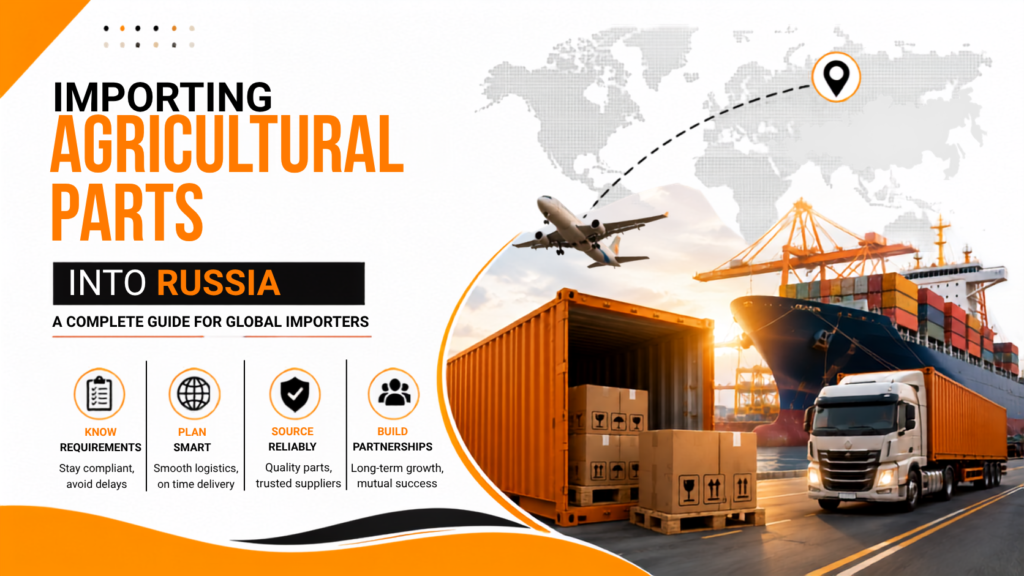
Russia remains one of the world’s largest agricultural markets, creating consistent demand for agricultural machinery parts that support equipment maintenance and repair. For international suppliers and importers, success depends on more than competitive pricing; it requires understanding import requirements, preparing accurate documentation, sourcing high-quality components, and working with experienced manufacturers.
This blog outlines the key considerations for importing agricultural machinery parts into Russia, helping B2B buyers make informed procurement decisions while supporting a smooth import process.
What Should You Know Before Importing Agricultural Machinery Parts into Russia?
Importing agricultural machinery parts into Russia requires careful planning and compliance with applicable customs and product requirements. Importers should verify HS codes, prepare complete shipping documentation, determine whether product conformity assessment is required, choose a reliable manufacturer, and plan logistics to help minimize delays and maintain supply chain efficiency.
Why Russia Is an Important Market for Agricultural Machinery Parts
Russia has an extensive agricultural sector that relies on tractors, harvesters, seeders, sprayers, and other heavy equipment throughout the year. As machinery ages and operates under demanding conditions, replacement parts are regularly required to support maintenance and reduce equipment downtime.
For global manufacturers and exporters, this creates opportunities to supply OEM and aftermarket agricultural machinery parts across a wide range of equipment categories. Importers that prioritize quality, regulatory compliance, and dependable supply chains are better positioned to meet ongoing market demand.
Import Requirements for Agricultural Machinery Parts in Russia
Understanding import requirements before shipment can help reduce customs-related issues and improve supply chain planning.
Product Classification (HS Codes)
Every imported product is classified using a Harmonized System (HS) code. The correct classification influences customs procedures, applicable duties and taxes, and whether additional product conformity requirements apply. Importers should verify the appropriate HS code before shipping.
Customs Documentation
Although documentation requirements vary by shipment and product category, importers commonly prepare:
- Commercial Invoice
- Packing List
- Bill of Lading or Air Waybill
- Import Contract
- Customs Declaration
- Certificate of Origin (when applicable)
- Product conformity documents, if required
Preparing accurate and consistent documentation helps streamline customs clearance.
Product Conformity Requirements
Depending on the product classification, certain machinery parts may require conformity assessment under applicable Eurasian Economic Union (EAEU) technical regulations before entering the Russian market. Importers should determine whether an EAC Certificate or Declaration of Conformity applies to their products based on the relevant regulations.
Technical Documentation
Some machinery products may require supporting technical documentation, such as product specifications, operating manuals, or technical passports. Importers should confirm documentation requirements before shipment, particularly when supplying technical equipment.
Key Factors to Consider Before Importing Agricultural Machinery Parts
Choosing the right supplier is one of the most important decisions for importers. Consider the following factors before placing an order.
1. Product Quality
High-quality materials, precision manufacturing, and consistent quality control help improve product reliability and reduce the risk of premature component failure.
2. Equipment Compatibility
Ensure parts are compatible with the intended agricultural machinery models and technical specifications. Verifying drawings, dimensions, and material requirements before production can help prevent costly errors.
3. Manufacturing Capability
Evaluate whether the manufacturer has the production capacity, machinery, and technical expertise to support both current and future purchasing requirements.
4. Quality Management
Ask suppliers about their inspection processes, testing procedures, and quality management systems. Consistent quality assurance helps maintain product consistency across production batches.
5. Packaging and Export Experience
Proper export packaging helps protect components during international transportation. Manufacturers with export experience are also more familiar with documentation, logistics coordination, and international shipping requirements.
6. Production Lead Time
Reliable production schedules are essential for maintaining inventory levels and reducing supply chain disruptions. Discuss manufacturing timelines before confirming purchase orders.
Choosing a Reliable Agricultural Machinery Parts Manufacturer
Selecting an experienced manufacturing partner can contribute to long-term procurement success.
When evaluating suppliers, consider whether they offer:
- OEM manufacturing capabilities
- Precision machining and modern production equipment
- Material traceability
- In-house quality inspections
- Experience serving international markets
- Flexible production for custom requirements
- Responsive technical and customer support
Requesting product samples, reviewing manufacturing capabilities, and conducting supplier assessments can provide additional confidence before entering a long-term partnership.
Common Challenges Importers Face
Importers may encounter challenges during the sourcing and import process, including:
- Incorrect product specifications
- Documentation errors
- Customs clearance delays
- Inconsistent product quality
- Extended production lead times
- Communication gaps between buyers and suppliers
Many of these issues can be reduced through supplier verification, accurate documentation, detailed technical specifications, and proactive production planning.
Best Practices for Successful Imports
To improve procurement efficiency, importers should:
- Verify supplier credentials and manufacturing capabilities.
- Confirm HS codes and applicable import requirements before shipment.
- Review technical drawings and product specifications carefully.
- Request samples before placing large-volume orders.
- Conduct quality inspections during production or before shipment.
- Maintain complete and accurate shipping documentation.
- Plan logistics and inventory requirements.
- Build long-term relationships with reliable manufacturing partners.
Conclusion
Importing agricultural machinery parts into Russia requires a combination of regulatory awareness, quality sourcing, and effective supply chain planning. By understanding documentation requirements, verifying product classifications, evaluating manufacturers carefully, and maintaining accurate shipping records, importers can improve procurement efficiency and reduce potential disruptions.
Working with an experienced agricultural machinery parts manufacturer that understands international export requirements can further support consistent product quality and reliable long-term supply.
FAQs
Documentation typically includes a commercial invoice, packing list, transport documents, customs declaration, import contract, and other product-specific documents where applicable. Requirements may vary depending on the product category.
Some products may require conformity assessment under applicable EAEU technical regulations. Importers should verify whether their products require an EAC Certificate or Declaration based on the relevant product classification.
Evaluate suppliers based on manufacturing capabilities, quality management systems, export experience, production capacity, technical support, and their ability to consistently meet product specifications.
Common challenges include incorrect documentation, product specification mismatches, customs delays, inconsistent quality, and long production lead times. Careful supplier selection and advance planning can help reduce these risks.
Before placing a large order, buyers should verify product specifications, manufacturing capabilities, quality inspection processes, packaging standards, production timelines, and applicable import requirements to support a smoother procurement process.