
 (+91) 842-700-1426
  agriparts@jcblmail.com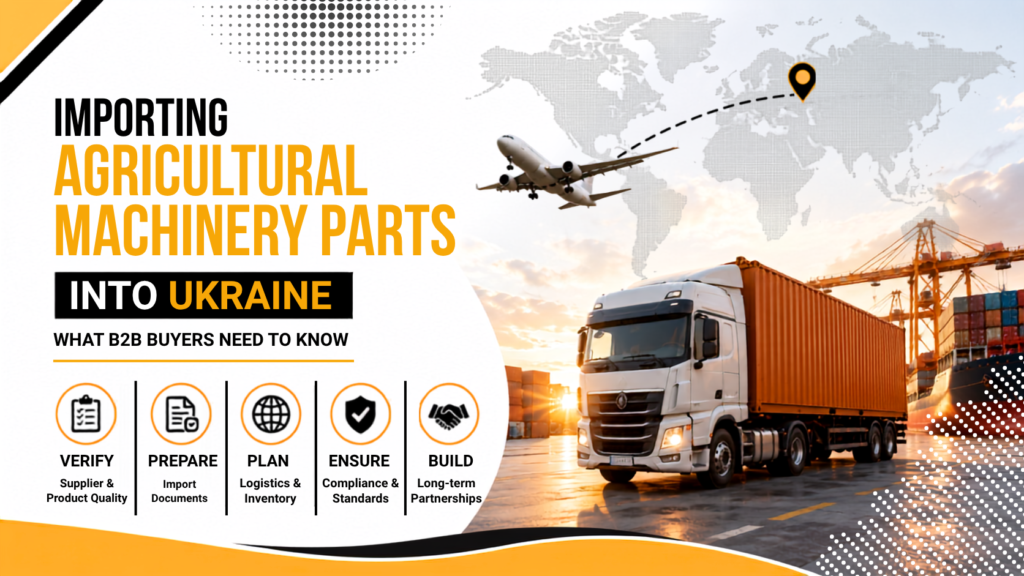
Ukraine’s agricultural sector depends heavily on reliable machinery to support farming operations, from crop cultivation and harvesting to transportation and processing. With tractors, combines, seeders, and other agricultural equipment operating across large farming areas, the demand for high-quality replacement components continues to grow.
For importers, distributors, and agricultural equipment businesses, successfully importing machinery parts into Ukraine requires more than finding a supplier. Buyers need to evaluate manufacturing capabilities, confirm product compatibility, understand documentation requirements, and establish a reliable supply chain.
This blog explains the key factors businesses should consider when importing agricultural machinery parts into Ukraine.
What Should Businesses Consider When Importing Agricultural Machinery Parts into Ukraine?
Businesses importing agricultural machinery parts into Ukraine should focus on supplier reliability, product quality, technical compatibility, export documentation, and logistics planning. Working with experienced OEM manufacturers and implementing quality checks can help businesses maintain consistent supply and reduce procurement risks.
Why Ukraine Imports Agricultural Machinery Parts
Ukraine has one of Europe’s largest agricultural industries, with extensive cultivation of grains, oilseeds, and other crops. Maintaining machinery uptime is essential for farms and agricultural businesses, especially during planting and harvesting seasons.
Many agricultural operations require regular replacement of wear parts, maintenance components, and equipment upgrades. For importers, the opportunity lies not only in supplying replacement parts but also in providing reliable, long-term sourcing solutions for agricultural machinery maintenance.
Key Steps for Importing Agricultural Machinery Parts into Ukraine
1. Identify the Right Agricultural Machinery Parts Supplier
Selecting the right supplier is one of the most important steps in the import process. Businesses should evaluate manufacturers based on:
- Manufacturing experience
- Production capacity
- Export capabilities
- Product range
- Technical expertise
- Quality control systems
A reliable supplier should be able to provide clear product specifications, consistent production quality, and documentation support.
2. Verify Manufacturing Capabilities
Before placing bulk orders, importers should confirm whether the manufacturer has the technical ability to produce the required components.
Important factors to review include:
- Production equipment and machinery
- Engineering capabilities
- Material processing methods
- Quality inspection procedures
- Experience producing similar agricultural components
This helps buyers avoid supply issues caused by limited production capability or inconsistent quality.
3. Confirm Product Compatibility and Specifications
Agricultural machinery parts must match the requirements of specific equipment models. Incorrect dimensions or materials can affect machine performance and reliability.
Before production or shipment, buyers should verify:
- Part drawings and specifications
- Equipment model compatibility
- Material requirements
- Dimensions and tolerances
- Surface treatment requirements
Providing accurate technical information helps manufacturers produce components that meet application requirements.
4. Prepare Required Import Documentation
Import documentation plays an important role in smooth customs processing. Requirements may vary depending on product classification, origin, and applicable regulations.
Common documents may include:
- Commercial invoice
- Packing list
- Transport documents
- Certificate of origin (where applicable)
- Customs declaration
- Technical product information
Businesses should confirm current requirements with Ukraine customs authorities or professional trade partners before shipment.
5. Plan Logistics and Inventory Requirements
Agricultural machinery parts often have seasonal demand, especially before planting and harvesting periods. Proper logistics planning helps avoid delays and equipment downtime.
Importers should consider:
- Shipping timelines
- Transportation options
- Lead times
- Warehouse planning
- Stock availability for critical parts
Maintaining a planned inventory of frequently required components can support faster customer service and reduce supply interruptions.
How to Choose an OEM Agricultural Machinery Parts Manufacturer
For businesses importing agricultural components in bulk, OEM manufacturing partnerships can provide better control over product specifications, quality standards, and supply consistency. Evaluating a manufacturer based on its production capabilities, quality processes, and industry experience can help buyers make a more informed sourcing decision.
Before selecting an OEM supplier, buyers should evaluate:
- Manufacturing Expertise: Choose manufacturers with experience in producing agricultural equipment components and an understanding of industry requirements.
-
Quality Management Processes: Review whether the supplier follows structured inspection procedures, including:
a. Incoming material checksb. Production monitoringc. Dimensional inspectiond. Final quality testing
- Export Experience: Manufacturers experienced in international shipments are generally better prepared to handle packaging, documentation, and communication requirements.
- Customization Capability: OEM suppliers should be able to support custom designs, private labeling, and product modifications when required.
Common Mistakes When Importing Agricultural Machinery Parts
1. Choosing a Supplier Only Based on Price
The lowest price does not always provide the best long-term value. Importers should also evaluate the following:
- Product quality
- Manufacturing reliability
- Delivery performance
- Quality assurance processes
2. Not Checking Product Quality Before Shipment.
Skipping inspections can lead to incorrect specifications, material issues, or inconsistent product quality.
Businesses should consider:
- Pre-production checks
- Production monitoring
- Final inspection reports
3. Ignoring Technical Specifications
Agricultural machinery components must meet specific operational requirements. Missing technical details can result in compatibility issues and additional costs.
4. Poor Supply Planning
Waiting until equipment failures occur can create urgent purchasing situations. Planning orders based on seasonal demand helps maintain availability.
OEM vs Aftermarket Agricultural Machinery Parts
Both OEM and aftermarket parts are used in agricultural equipment maintenance. The right choice depends on business requirements.
| Factor | OEM Parts | Aftermarket Parts |
| Manufacturing | Produced according to customer specifications | Produced for broader replacement applications |
| Customization | Higher flexibility for specific requirements | Usually standardized options |
| Supply Approach | Suitable for long-term sourcing programs | Useful for general replacement needs |
| Application | Used when precise specifications are important | Used when compatibility and availability are priorities |
Best Practices for Building a Reliable Agricultural Parts Supply Chain
Businesses importing agricultural machinery parts into Ukraine can improve sourcing efficiency by:
- Partnering with experienced manufacturers
- Verifying supplier capabilities before ordering
- Maintaining accurate technical documentation
- Conducting quality inspections
- Planning inventory based on demand cycles
- Building long-term supplier relationships
A structured procurement process helps agricultural businesses maintain consistent access to essential machinery components.
Conclusion
Importing agricultural machinery parts into Ukraine requires careful supplier selection, quality verification, accurate documentation, and effective logistics planning. For B2B buyers, working with experienced OEM manufacturers and following a structured sourcing process can help create a dependable supply chain for agricultural equipment components.
FAQs
Commonly imported agricultural machinery parts include tractor components, combine harvester parts, bearings, gears, hydraulic components, filters, cutting parts, and wear-resistant components.
Businesses should evaluate suppliers based on manufacturing experience, quality systems, production capacity, export history, technical capabilities, and customer support.
Import documentation may include commercial invoices, packing lists, transport documents, customs declarations, certificates of origin where applicable, and technical product information.
Importers can improve quality control by reviewing supplier capabilities, approving specifications, conducting inspections, and requesting quality documentation before shipment.
OEM manufacturers allow businesses to source components based on specific requirements, including custom specifications, consistent production standards, and long-term supply needs.