
 (+91) 842-700-1426
  agriparts@jcblmail.com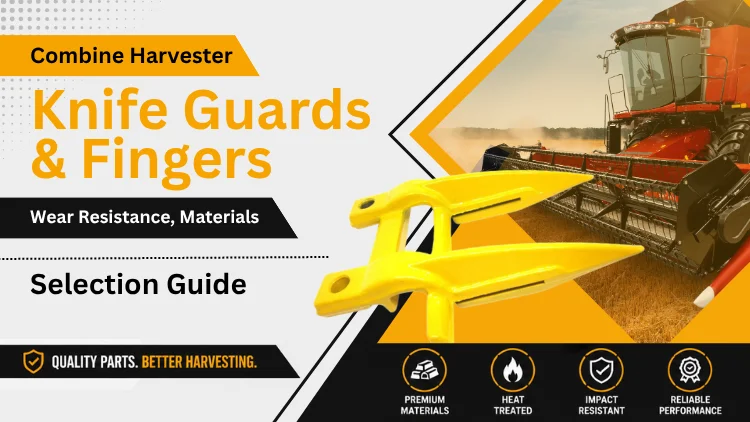
Harvesting efficiency starts with a reliable cutter bar, and one of its most important components is the combine harvester knife guard, also known as a knife finger. These parts protect the reciprocating knife sections, support precise cutting, and reduce crop losses. Their material, hardness, and wear resistance directly affect cutting quality, machine uptime, and replacement costs.
Whether you’re a farmer, equipment dealer, or agricultural parts buyer, understanding knife guard materials and wear resistance helps you choose longer-lasting, high-performing replacement parts.
What Are Combine Harvester Knife Guards?
Combine harvester knife guards are metal components mounted along the cutter bar that hold and protect the reciprocating knife sections while guiding them through crops. They provide a stable cutting surface, reduce blade movement, improve cutting accuracy, and help minimize crop loss.
| Feature | Details |
| Primary Function | Supports and protects knife sections during cutting |
| Common Materials | Ductile iron, forged steel, alloy steel |
| Typical Hardness | 45–60 HRC (varies by material and heat treatment) |
| Wear Protection | Heat treatment, hardfacing, carbide reinforcement |
| Replacement Signs | Rounded ledger edges, cracks, excessive wear |
| Applications | Wheat, rice, barley, soybean, maize, and other grain harvesters |
Why Knife Guards Matter in Harvesting
Knife guards do much more than protect the cutter bar. They directly influence harvesting performance.
A quality knife guard helps:
- Maintain smooth knife movement
- Produce cleaner crop cuts
- Reduce knife vibration
- Prevent excessive blade wear
- Minimize crop losses
- Improve harvesting speed
- Reduce machine downtime
Even premium knife sections cannot perform efficiently if the guards are worn or poorly manufactured.
Materials Used in Combine Harvester Knife Guards
The material determines how well a knife guard resists wear, impact, and harsh field conditions.
| Material | Advantages | Best For |
| Ductile Iron | Good wear resistance, cost-effective | General farming |
| Forged Steel | Excellent strength and impact resistance | Heavy-duty harvesting |
| High Carbon Steel | High hardness after heat treatment | Standard field conditions |
| Alloy Steel | Superior wear resistance and durability | Commercial and high-acreage operations |
1. Ductile Iron
Ductile iron offers a good balance between strength and affordability. It performs well under normal harvesting conditions and is commonly used in replacement knife guards.
2. Forged Steel
Forged steel guards have a refined grain structure that improves toughness. They are ideal for rocky fields, heavy crop residue, and demanding harvesting environments where impact resistance is essential.
3. High Carbon Steel
High carbon steel becomes highly wear resistant after proper heat treatment. It provides longer service life than standard steel while maintaining reliable cutting performance.
4. Alloy Steel
Alloy steel contains elements such as chromium, manganese, or molybdenum that improve hardness, wear resistance, and fatigue strength. These guards are widely preferred for commercial harvesting where equipment operates for long hours.
How Wear Resistance Improves Harvesting Performance
Wear resistance is one of the most important factors when selecting knife guards because the cutter bar is constantly exposed to crops, dust, sand, and soil.
A wear-resistant knife guard offers several benefits:
- Longer Service Life: Harder materials wear more slowly, reducing the need for frequent replacements.
- Cleaner Crop Cutting: Sharp ledger surfaces allow knife sections to shear crops efficiently rather than tear them.
- Lower Maintenance Costs: Durable guards reduce replacement frequency and labor costs.
- Less Machine Downtime: Fewer worn components mean fewer unexpected repairs during the harvesting season.
- Better Cutting Accuracy: Consistent knife clearance helps maintain smooth and uniform cutting across the entire cutter bar.
Technologies That Improve Wear Resistance
Manufacturers use several processes to increase the durability of knife guards.
1. Heat Treatment
Heat treatment hardens the metal surface while maintaining core toughness. Properly heat-treated guards resist abrasion and last significantly longer.
2. Induction Hardening
This process hardens only the working surfaces that experience the most wear, improving durability without making the entire guard brittle.
3. Hardfacing
Hardfacing applies an extra wear-resistant layer to high-contact areas, extending service life in abrasive conditions.
4. Carbide Reinforcement
Some premium knife guards feature carbide inserts or carbide-coated ledger surfaces. Carbide offers exceptional abrasion resistance and is ideal for sandy soils and high-acreage harvesting.
5. Precision Machining
Accurate manufacturing ensures proper alignment between the knife section and guard, reducing uneven wear and improving cutting efficiency.
Recommended Hardness for Knife Guards
Hardness must balance wear resistance with toughness.
| Material | Typical Hardness |
| Ductile Iron | 40–48 HRC |
| Forged Steel | 45–55 HRC |
| Alloy Steel | 50–60 HRC |
If the guard is too soft, it wears quickly. If it is too hard, it may crack under heavy impact. A properly heat-treated guard provides the best combination of durability and strength.
How to Choose the Right Combine Harvester Knife Guards
Selecting the right knife guard depends on your operating conditions rather than price alone.
Consider these factors:
- Choose materials suited to your field conditions.
- Match the guard with your combine’s OEM specifications.
- Look for heat-treated or induction-hardened components.
- Check manufacturing accuracy and dimensional consistency.
- Consider crop type and harvesting hours.
- Buy from manufacturers with proven quality control and material certifications.
- Ensure replacement parts are readily available for future maintenance.
A high-quality knife guard may cost more initially but often lowers the total cost of ownership by lasting longer.
Signs It’s Time to Replace Knife Guards
Regular inspection prevents poor cutting performance.
Replace knife guards if you notice:
- Rounded or worn ledger edges
- Visible cracks or broken fingers
- Bent guards
- Uneven or torn crop cutting
- Excessive clearance between knife and guard
- Frequent knife section damage
- Increased cutter bar vibration
Replacing worn guards before harvest helps avoid costly downtime during peak season.
OEM vs. Aftermarket Knife Guards
| OEM Parts | Quality Aftermarket Parts |
| Original equipment specifications | Comparable specifications from trusted manufacturers |
| Higher purchase price | More cost-effective |
| Guaranteed compatibility | Wide compatibility when manufactured accurately |
| Brand-specific availability | Easier sourcing for multiple machine models |
High-quality aftermarket knife guards can deliver performance similar to OEM parts when they are manufactured from premium materials and produced with strict quality control.
Conclusion
Combine harvester knife guards and fingers are small components with a major impact on harvesting efficiency. Their material, hardness, and wear resistance determine how well the cutter bar performs under demanding field conditions.
When selecting replacement knife guards, prioritize high-quality materials, proper heat treatment, precise manufacturing, and compatibility with your machine. Durable knife guards reduce downtime, improve cutting accuracy, extend component life, and help achieve more efficient harvesting season after season.
FAQs
Service life depends on material quality, field conditions, operating hours, and maintenance. Premium alloy steel or forged steel guards generally last longer than standard cast components.
Alloy steel with proper heat treatment or carbide reinforcement typically provides the highest wear resistance for demanding harvesting conditions.
Yes. Worn guards increase knife clearance, reduce cutting accuracy, tear crops instead of cutting them cleanly, and can increase grain losses.
No. Knife guards vary by machine model, cutter bar design, mounting style, and manufacturer specifications. Always verify compatibility before purchasing.
For operations with abrasive soils, long harvesting hours, or commercial-scale farming, carbide-reinforced guards often provide longer service life and lower replacement costs.