
 (+91) 842-700-1426
  agriparts@jcblmail.com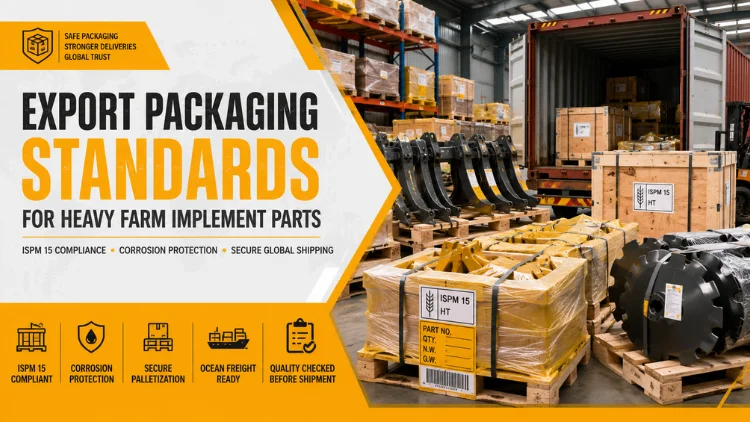
Heavy farm implement parts are designed to perform in demanding agricultural environments, but they also face significant risks during international transportation. Long ocean transit times, rough handling, humidity, and container movement can lead to corrosion, surface damage, and costly shipment claims if products are not packaged correctly.
For manufacturers, exporters, importers, and distributors, following proper export packaging standards is essential for protecting product quality, meeting international regulations, and ensuring safe delivery across global markets. This guide explains the key standards, materials, and best practices used for exporting heavy farm implement parts worldwide.
Why Export Packaging Matters for Agricultural Machinery Parts
Heavy agricultural components such as cultivator tines, rotavator blades, harrow discs, linkage assemblies, plough parts, and seeder components are exposed to multiple risks throughout the export process.
Proper packaging helps:
- Prevent impact and handling damage
- Protect against rust and corrosion
- Reduce cargo movement during transit
- Minimize warranty claims and replacement costs
- Improve container utilization
- Ensure compliance with international shipping regulations
For buyers and distributors, reliable export packaging reduces supply chain disruptions and helps maintain product quality from the manufacturing facility to the final destination.
International Export Packaging Standards and Compliance Requirements
Heavy farm implement parts must comply with international packaging standards such as ISPM 15, freight packaging requirements, and destination-country import regulations to ensure safe transportation and smooth customs clearance.
Proper compliance reduces the risk of shipment delays, cargo damage, customs inspections, and additional logistics costs.
ISPM 15 Compliance for Wooden Packaging
ISPM 15 is an international standard that regulates wooden pallets, crates, and dunnage used in export shipments.
Since heavy farm implement parts are often shipped on wooden pallets or in wooden crates, exporters must ensure that all wood packaging materials are heat-treated and carry an approved ISPM 15 mark.
Key requirements:
- Heat-treated wooden packaging
- Official ISPM 15 certification mark
- Compliance for pallets, crates, and wooden supports
- Avoidance of customs delays and shipment rejection
Packaging Requirements for Ocean Freight
Export packaging must be strong enough to withstand moisture, vibration, stacking pressure, and long transit times during sea transportation.
Heavy agricultural machinery parts may spend several weeks inside shipping containers, making load stability and corrosion protection essential.
Key requirements:
- Heavy-duty pallets or export crates
- Steel or polyester strapping
- Moisture-resistant wrapping
- Anti-corrosion protection
- Secure container loading
Destination-Specific Import Requirements
Many countries have additional packaging and labeling requirements for imported machinery parts.
Exporters shipping to North America, Europe, Africa, the Middle East, and Latin America should verify destination-country regulations before dispatch.
Common compliance checks include:
- ISPM 15-certified packaging
- Country-of-origin markings
- Product labels and shipping marks
- Packaging integrity
- Accurate shipping documentation
Common Packaging Materials Used for Heavy Farm Implement Parts
The packaging method depends on the component’s size, weight, shape, and transportation requirements.
| Packaging Material | Primary Purpose |
| Wooden Crates | Protection for heavy and high-value parts |
| Export Pallets | Safe handling and transport |
| Steel Strapping | Load stabilization |
| VCI Packaging | Corrosion prevention |
| Shrink Wrap | Moisture protection |
| Foam Protection | Impact resistance |
| Corrugated Boxes | Small component packaging |
Using export-grade packaging materials helps maintain product integrity throughout international transportation.
Packaging Methods for Different Farm Implement Components
Different agricultural machinery components require tailored packaging solutions.
1. Cultivator and Harrow Parts
Heavy cultivator shanks, tines, and harrow components are typically palletized and secured with steel strapping. Protective wrapping helps prevent scratches and coating damage during transit.
2. Rotavator Parts
Rotavator blades and related components are commonly bundled, wrapped, and secured on export pallets. Additional corrosion protection is recommended for sea freight shipments.
3. Seeder and Planter Components
Precision parts require reinforced packaging and cushioning to prevent movement and maintain dimensional accuracy during transportation.
4. Forged and Cast Agricultural Parts
Forged and cast components are often packed in heavy-duty crates or reinforced pallets because of their weight and handling requirements.
How Exporters Prevent Rust During International Shipping
Corrosion is one of the most common causes of damage in exported agricultural machinery parts, particularly during ocean transportation.
To protect products, exporters typically use:
- VCI (Volatile Corrosion Inhibitor) packaging
- Anti-rust coatings
- Moisture barrier films
- Desiccants and humidity absorbers
- Sealed protective wrapping
These measures help protect parts from humidity, condensation, and salt-laden marine environments.
Export Packaging Checklist for Heavy Farm Implement Parts
Before shipment, exporters should verify that the packaging meets the following requirements:
- ISPM 15-compliant pallets or crates
- Secure palletization and load balancing
- Steel strapping for heavy components
- Corrosion protection measures applied
- Moisture-resistant wrapping installed
- Proper product labeling completed
- Container loading plan verified
- Final packaging inspection completed
This checklist helps reduce transportation risks and improve shipment reliability.
Palletization and Load Securing Best Practices
Effective palletization is critical for heavy farm implement exports.
1. Even Weight Distribution: Loads should be distributed evenly to prevent instability during transportation and handling.
2. Secure Strapping Systems: Steel or high-strength polyester straps help prevent cargo movement and maintain package integrity.
3. Corner and Edge Protection: Protective corner supports reduce packaging damage and improve load stability.
4. Container Load Security: Products should be loaded strategically to maximize space utilization while minimizing cargo shifting during transit.
5. Forklift Accessibility: Packaging should allow safe handling with forklifts and warehouse equipment throughout the supply chain.
Export Labeling Requirements
Accurate labeling improves shipment traceability and customs clearance efficiency.
Export labels typically include:
- Product name
- Part number
- Quantity
- Gross and net weight
- Country of origin
- Handling instructions
- Consignee details
- Shipping marks
Many exporters also use barcode or QR-code systems to improve inventory management and shipment tracking.
How Buyers Can Verify Export Packaging Quality
Importers and distributors should evaluate packaging standards before placing large orders.
Key questions to ask suppliers include:
- Are wooden pallets and crates ISPM 15 certified?
- What corrosion protection methods are used?
- How are heavy components secured during transportation?
- Are packaging inspections conducted before shipment?
- Can packaging photos be provided before container loading?
Verifying these details helps buyers reduce logistics risks and avoid unexpected damage claims.
Common Export Packaging Mistakes to Avoid
Even well-manufactured products can be damaged due to poor packaging practices.
Common mistakes include:
- Using non-compliant wooden packaging
- Inadequate rust protection
- Poor weight distribution
- Weak load securing methods
- Incorrect shipment labeling
- Insufficient cushioning
- Improper container loading
Avoiding these issues improves delivery performance and customer satisfaction.
Conclusion
Export packaging is a critical part of the global supply chain for heavy farm implement parts. Proper packaging protects products from impact damage, corrosion, and handling risks while ensuring compliance with international shipping standards.
By using ISPM 15-compliant packaging, implementing effective corrosion protection, securing loads correctly, and following recognized export packaging practices, manufacturers and exporters can ensure agricultural machinery parts reach customers safely and efficiently across global markets.
FAQs
Heavy farm implement parts are typically packaged using export pallets, wooden crates, steel strapping, VCI packaging, moisture barriers, and protective wrapping based on the product’s weight and transportation requirements.
Yes. When wooden pallets, crates, or supports are used in international shipments, they generally must comply with ISPM 15 regulations and carry the required treatment mark.
Exporters use anti-corrosion coatings, VCI packaging, desiccants, moisture barrier films, and sealed wrapping systems to protect products from humidity and marine conditions.
Proper palletization improves load stability, reduces transit damage, supports safe handling, and helps maximize container efficiency.
Buyers should confirm ISPM 15 compliance, review corrosion protection methods, request packaging photographs, and verify that final inspections are conducted before shipment.