
 (+91) 842-700-1426
  agriparts@jcblmail.com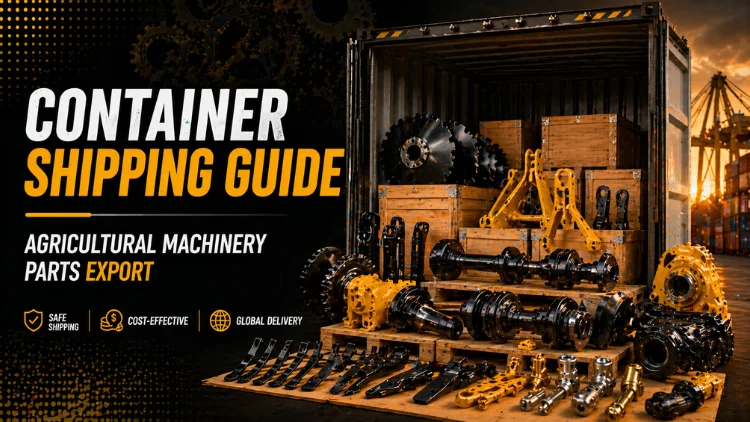
Exporting agricultural machinery parts globally is a high-value but logistics-sensitive operation. From avoiding transit damage and corrosion to ensuring smooth customs clearance, container shipping plays a critical role in profitability and delivery reliability.
This guide breaks down how to ship agricultural machinery parts in containers efficiently, covering container types, packaging, costs, compliance, and expert best practices used by exporters shipping to the USA, EU, Africa, and Southeast Asia.
Key Takeaways
- Choosing the right container and packaging is essential to prevent damage and optimize shipping costs.
- Accurate documentation and HS codes ensure smooth customs clearance and avoid delays.
- Efficient container loading (CBM optimization) significantly reduces per-unit logistics costs.
- Following international regulations and Incoterms is critical for compliant, hassle-free exports.
- Successful exports depend on combining product quality with efficient shipping practices.
What Is Container Shipping for Agricultural Machinery Parts?
This is the process of transporting spare components for tractors and harvesters in standardized containers via sea freight, ensuring safe handling, cost efficiency, and compliance with international export regulations.
These shipments typically include:
- Tractor components (engines, axles, transmissions)
- Harvester and implement parts
- Attachments and accessories
CKD (Completely Knocked Down) kits for assembly
Types of Shipping Containers Used
Choosing the right container directly impacts overall shipping costs, cargo protection, and regulatory compliance. Each container type is designed to handle specific sizes, weights, and loading requirements for agricultural machinery parts.
1. Standard Dry Containers (20ft & 40ft)
Standard dry containers are the most widely used for shipping agricultural machinery parts. They are ideal for packed spare parts, boxed components, and palletized cargo, offering cost efficiency and easy handling.
2. High Cube Containers
High cube containers are suitable for lightweight yet bulky machinery parts. With approximately one extra foot in height compared to standard containers, they allow better volume utilization and more efficient stacking.
3. Open Top Containers
Open-top containers are designed for oversized machinery parts that cannot be easily loaded through standard doors. They have no fixed roof and are covered with tarpaulin, allowing crane-based loading.
4. Flat Rack Containers
Flat rack containers are used for transporting heavy, irregular, or out-of-gauge agricultural machinery parts. Without side walls, they provide flexibility for loading large equipment such as frames and structures.
Container Comparison Table
| Container Type | Best For | Max Weight Capacity | Key Benefit |
| 20ft Dry | Dense spare parts | ~28 tons | Cost-effective for heavy cargo |
| 40ft Dry | Bulk shipments | ~26 tons | Better for volume |
| High Cube | Bulky items | ~26 tons | Extra height |
| Open Top | Oversized cargo | ~26 tons | Top loading |
| Flat Rack | Heavy machinery | Varies | Handles irregular shapes |
How to Choose the Right Container for Machinery Parts
- Use 20ft containers for heavy, dense cargo
- Use 40ft containers for high-volume shipments
- Choose a high cube for bulky but lightweight parts
- Use flat rack or open top for oversized machinery
Step-by-Step Process to Ship Machinery Parts in a Container
- Classify products using the correct HS codes
- Package parts with anti-rust protection
- Select the appropriate container type
- Book freight with a shipping partner
- Prepare export documentation
- Complete customs clearance at origin
- Load, seal, and dispatch the container
- Track shipment during transit
- Clear customs at destination and deliver
Expert Insight: Common Export Mistakes to Avoid
Based on real export operations, many businesses face losses due to avoidable mistakes such as incorrect HS codes, poor packaging, and inefficient container utilization. For example, exporters shipping to African ports often experience delays due to incomplete documentation or port congestion.
Packaging Guidelines for Agricultural Machinery Parts
Improper packaging is one of the leading causes of export losses.
Key Packaging Practices
- Apply anti-rust coatings or VCI (Volatile Corrosion Inhibitors)
- Use fumigated wooden crates or treated pallets
- Ensure shock absorption for fragile components
- Use waterproof wrapping for sea shipments
ISPM-15 Compliance
All wooden packaging must comply with ISPM-15 standards to prevent quarantine issues.
Packaging Checklist
- Moisture control (silica gel/desiccants)
- Clear labeling (part number, weight, origin)
- Proper weight distribution
- Strong pallet base for forklift handling
Documentation Required for Export
Accurate documentation ensures smooth customs clearance and avoids shipment holds.
| Document | Purpose | Mandatory |
| Commercial Invoice | Declares transaction value | Yes |
| Packing List | Details cargo contents | Yes |
| Bill of Lading | Proof of shipment | Yes |
| Certificate of Origin | Confirms origin country | Often required |
| Insurance Certificate | Covers cargo risk | Recommended |
| Phytosanitary Certificate | For wood packaging compliance | Conditional |
Cost Breakdown of Container Shipping
Understanding cost components helps in pricing and negotiation.
Key Cost Elements
- Ocean freight charges
- Terminal Handling Charges (THC)
- Inland transportation
- Customs clearance fees
- Marine insurance
Sample Cost Estimate (India → USA/EU)
| Cost Component | Approximate Range |
| Ocean Freight (20ft) | $1,200 – $3,000 |
| THC & Port Charges | $150 – $400 |
| Inland Transport | $100 – $500 |
| Documentation | $50 – $150 |
| Insurance | 0.3% – 0.8% of cargo value |
Note: Rates vary based on season, route, and fuel prices.
How to Calculate Container Load Efficiency
Efficient loading reduces shipping cost per unit.
Basic Formula
CBM (Cubic Meter) = Length × Width × Height (in meters)
Optimization Tips
- Balance weight vs volume
- Avoid unused vertical space
- Use stackable packaging
- Plan the loading layout in advance
Common Challenges in Shipping Machinery Parts
Shipping agricultural machinery parts internationally involves multiple risks that can impact cost, delivery timelines, and cargo safety. Understanding these common challenges and their solutions helps exporters ensure smoother, more reliable shipments.
1. Transit Damage
Transit damage occurs mainly due to inadequate packaging or improper handling during loading and transport. Using shockproof crates, cushioning materials, and secure loading methods minimizes movement and protects parts effectively.
2. Rust & Corrosion
Exposure to moisture during sea transit can lead to rust and corrosion, especially for metal components. Applying VCI materials and anti-rust coatings and including desiccants helps maintain product quality throughout the journey.
3. Customs Delays
Customs delays are often caused by incorrect HS codes, incomplete documentation, or regulatory non-compliance. Double-checking product classification and ensuring accurate, complete paperwork help prevent costly delays and penalties.
4. Container Space Wastage
Poor container planning leads to unused space and higher shipping costs per unit. Optimizing palletization, stacking efficiently, and planning load layouts improves space utilization and reduces overall logistics expenses.
International Shipping Regulations & Compliance
Understanding international shipping regulations is essential to avoid delays, penalties, and rejected shipments. Exporters must follow global standards, use correct trade terms, and comply with country-specific import requirements.
ISPM-15 (Wood Packaging Regulation)
ISPM-15 is a global standard for wooden packaging materials such as pallets and crates. It requires heat treatment or fumigation to prevent pest contamination, and it is mandatory for exports to most countries.
Incoterms (Key Trade Terms)
Incoterms define the responsibilities of buyers and sellers in international trade, including cost, risk, and delivery points. Choosing the right term ensures clarity and avoids disputes during shipping.
- FOB (Free on Board): Seller is responsible until goods are loaded onto the ship at the port of origin.
- CIF (Cost, Insurance, Freight): Seller covers shipping costs and insurance up to the destination port.
- EXW (Ex Works): Buyer takes full responsibility from the seller’s premises, including transport and export formalities.
Country-Specific Rules
Each region has its own import regulations, documentation requirements, and clearance processes that exporters must follow carefully.
- USA/EU: Require strict compliance, accurate documentation, and adherence to safety and quality standards.
- Africa: Port handling inefficiencies and customs delays are common, requiring better planning and buffer time.
- Middle East: Documentation must be highly accurate, as even small errors can lead to shipment delays or rejection.
Best Practices to Reduce Shipping Costs
- Use FCL (Full Container Load) instead of LCL when possible
- Consolidate shipments to maximize container usage
- Negotiate long-term freight contracts
- Choose the right container type
- Avoid peak shipping seasons when rates spike
Conclusion
Container shipping is essential for scaling agricultural machinery exports globally. By combining proper packaging, accurate documentation, and optimized container usage, exporters can significantly reduce risks, prevent damage, and control logistics costs.
For businesses supplying agricultural machinery parts internationally, aligning product quality with efficient shipping practices ensures better customer satisfaction and long-term growth in competitive global markets.
Looking for reliable agricultural machinery parts for export? Partner with a trusted supplier that understands global shipping requirements and delivers quality components ready for international markets.
FAQs
The best container depends on the cargo type. Standard dry containers are ideal for boxed spare parts, while flat racks or open-top containers are better suited for oversized or heavy machinery components.
Container shipping costs typically range from $1,200 to $3,000 for a 20ft container from India, depending on route, season, and additional charges like THC, inland transport, and insurance.
Transit time ranges from 15 to 45 days depending on destination, shipping route, and port congestion. For example, India to Europe may take 20–30 days, while shipments to the USA may take longer.
Yes, cargo insurance is highly recommended, as it protects against risks such as damage, theft, or loss during transit, especially for high-value machinery parts.
ISPM-15 is an international standard that requires wooden packaging materials to be treated and certified to prevent the spread of pests across countries.