
 (+91) 842-700-1426
  agriparts@jcblmail.com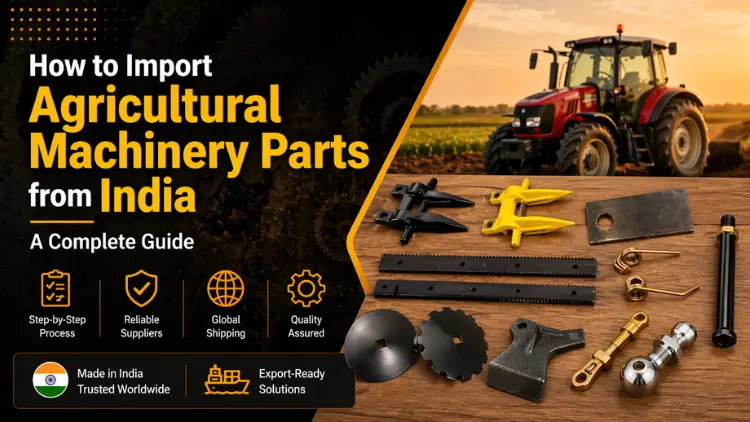
You can import agricultural machinery parts from India by following a step-by-step process:
Define requirements → Find suppliers → Verify credibility → Test samples → Check regulations → Negotiate terms → Arrange shipping → Clear customs.
India has become one of the most reliable sourcing destinations for agricultural machinery parts, supplying to markets across Africa, Europe, the Middle East, and North America. With strong manufacturing capabilities, competitive pricing, and growing export experience, Indian suppliers are increasingly preferred by global importers and distributors.
If you’re planning to source from India, this guide will walk you through the complete import process, step by step, along with practical tips to avoid common risks..
Key Takeaways
- India offers cost-effective, export-ready agricultural machinery parts with global compliance standards
- A structured import process reduces risks and ensures smooth sourcing
- Supplier verification and sample testing are critical before bulk orders
- Choosing the right Incoterms (CIF, FOB) impacts cost and logistics control
- Proper documentation and customs compliance prevent delays and penalties
- India supports both OEM and aftermarket parts, depending on your market needs
What Is the Process to Import Agricultural Machinery Parts from India?
Importing agricultural machinery parts from India involves identifying the right supplier, verifying product quality, understanding import regulations, negotiating pricing and shipping terms, and completing logistics and customs clearance.
Why Import Agricultural Machinery Parts from India?
India offers a strong value proposition for B2B buyers looking for quality and cost efficiency.
Key Reasons:
- Cost-Effective Manufacturing: Lower production and labor costs reduce overall sourcing expenses
- Wide Product Availability: Tractor parts, engine components, hydraulic systems, implements, and spares
- Export-Ready Suppliers: Many manufacturers have years of experience serving global markets
- Quality Compliance: ISO-certified facilities and adherence to international standards
- OEM & Customization Capabilities: Ideal for private labeling and bulk orders
For importers, this means better margins, scalable supply, and flexible manufacturing options.
Step-by-Step Process to Import Agricultural Machinery Parts from India
Step 1: Define Your Product Requirements
Start by clearly identifying what you need:
- Types of parts (tractor, harvester, tiller, irrigation equipment)
- Technical specifications (material, size, compatibility)
- Quantity and order frequency
- Any customization or branding requirements
A clear requirement helps suppliers provide accurate quotes and reduces errors later.
Step 2: Find Reliable Suppliers in India
You can source suppliers through:
- B2B marketplaces
- Trade fairs and industry exhibitions
- Direct manufacturer websites
What to Look For:
- Export experience
- Certifications (ISO, CE if applicable)
- Client portfolio or case studies
Shortlist at least 2–3 suppliers to compare quality and pricing.
Step 3: Verify Supplier Credibility
Before placing any order, validate the supplier:
- Check company registration and export licenses
- Ask for certifications and compliance documents
- Review past export markets
- Conduct video calls or factory audits if possible
For large orders, consider using a third-party inspection agency. You can also verify exporters through organizations like the Engineering Export Promotion Council of India (EEPC), which lists credible export-oriented manufacturers.
Step 4: Request Samples and Check Quality
Always test samples before bulk purchasing:
- Evaluate material strength and durability
- Check dimensions and compatibility
- Test performance if required
This step helps you avoid costly mistakes and ensures the product meets your standards.
Step 5: Understand Import Regulations in Your Country
Import rules vary depending on your country. You should check:
- Import duties and taxes
- Product standards and certifications
- Restricted or regulated items
Tip: Consult a customs broker or import expert in your country to avoid compliance issues.
Step 6: Negotiate Pricing and Payment Terms
Once you finalize a supplier, discuss:
- Product pricing and bulk discounts
- Minimum Order Quantity (MOQ)
- Payment terms
Common Payment Methods:
- Letter of Credit (LC): Safest for large transactions
- Telegraphic Transfer (TT)
- Advance + balance payment
Also, clearly define Incoterms:
| Incoterm | What It Means | Best For |
| FOB (Free on Board) | Supplier handles till port | Experienced importers |
| CIF (Cost, Insurance, Freight) | Supplier handles shipping + insurance | First-time importers |
| EXW (Ex Works) | Buyer handles everything | Advanced buyers |
Pro Tip: If you are a first-time importer, choosing CIF (Cost, Insurance, Freight) is usually safer. The supplier manages shipping and insurance, reducing your logistical complexity.
Step 7: Arrange Shipping and Logistics
Choose a shipping method based on urgency and cost:
- Sea Freight: Best for bulk orders, cost-effective
- Air Freight: Faster but more expensive
Work with:
- Freight forwarders
- Shipping companies
- Customs clearing agents
Proper logistics planning ensures timely delivery and cost control.
Step 8: Prepare Documentation and Clear Customs
Accurate documentation is critical for smooth import clearance.
Key Documents:
- Commercial Invoice
- Packing List
- Bill of Lading (or Airway Bill)
- Certificate of Origin
- Insurance Certificate
Once goods arrive:
- Pay applicable duties
- Complete customs inspection
- Arrange final delivery
Cost Breakdown of Importing from India
| Cost Category | Typical Components | Who Pays? (FOB) |
| Sourcing Cost | Unit price + export packaging | Buyer |
| Inland Logistics | Factory to port + port loading | Supplier |
| Freight & Insurance | Ocean/air freight + transit insurance | Buyer |
| Landing Costs | Import duty + VAT/GST + terminal handling | Buyer |
Import Regulations & Compliance Considerations
Different countries have different compliance requirements.
You May Need:
- Product certifications (ISO, CE, etc.)
- Safety and quality approvals
- Proper labeling and packaging
Failing to meet compliance standards can result in delays or shipment rejection.
Understanding HS Codes for Agricultural Machinery Parts
Agricultural machinery parts are typically classified under HS Code Chapter 84, which covers machinery, mechanical appliances, and related components.
Correct HS Code classification is important because it determines the following:
- Import duties
- Tax rates
- Compliance requirements
Always confirm the exact HS Code with your customs broker to avoid delays or penalties.
How to Choose the Right Supplier in India
Selecting the right partner is critical for long-term success.
Supplier Checklist:
- Proven export experience
- Valid certifications
- Consistent product quality
- Strong communication
- Ability to scale production
A reliable supplier is not just a vendor, they are a long-term business partner.
OEM vs Aftermarket Parts: What Should You Import?
OEM Parts:
- Made to original specifications
- Higher consistency and quality
- Ideal for branded resale
Aftermarket Parts:
- More affordable
- Widely available
- Suitable for price-sensitive markets
Choose based on your target market and business model.
Common Challenges in Importing (and How to Avoid Them)
1. Quality Issues: Products may not meet your expectations.
=>Solution: Always test samples and verify the supplier before placing bulk orders.
2. Shipping Delays: Deliveries can take longer than expected.
=>Solution: Work with experienced exporters and agree on clear timelines in advance.
3. Hidden Costs: Unexpected charges can increase your total cost.
=>Solution: Clearly define Incoterms and confirm all costs upfront.
4. Communication Gaps: Miscommunication can lead to errors or delays.
=>Solution: Choose suppliers with professional export teams and clear communication processes.
Pro Tips for First-Time Importers
- Start with a small trial order
- Build long-term supplier relationships
- Use third-party inspection services
- Keep clear written agreements
- Monitor shipment and delivery closely
Conclusion
Importing agricultural machinery parts from India is a strategic and cost-effective decision for B2B buyers. With the right supplier, clear processes, and proper planning, you can build a reliable and scalable supply chain.
The key to success lies in supplier verification, quality control, and understanding import regulations. When done correctly, importing from India can give your business a strong competitive advantage in the global market.
FAQs
Importing agricultural machinery parts from India is easy with a clear step-by-step process:
a. Define your requirements
b. Find reliable suppliers
c. Verify supplier credibility
d. Request and test samples
e. Check import regulations
f. Negotiate pricing & terms
g. Arrange shipping & logistics
h. Complete customs clearance
You typically need a commercial invoice, packing list, bill of lading, certificate of origin, and insurance certificate. Some countries may also require additional compliance documents based on local regulations.
You can find suppliers through B2B platforms, trade fairs, or direct manufacturer websites. Always verify certifications, export experience, and request product samples before placing bulk orders.
Shipping time depends on the method and destination. Sea freight usually takes 2–6 weeks, while air freight takes 3–7 days.
For beginners, CIF (Cost, Insurance, Freight) is usually the best option because the supplier handles shipping and insurance, reducing your logistical responsibility.
Yes, India offers competitive pricing, bulk manufacturing advantages, and a wide supplier base, making it a cost-effective sourcing option for importers and distributors.