
 (+91) 842-700-1426
 agriparts@jcblmail.com
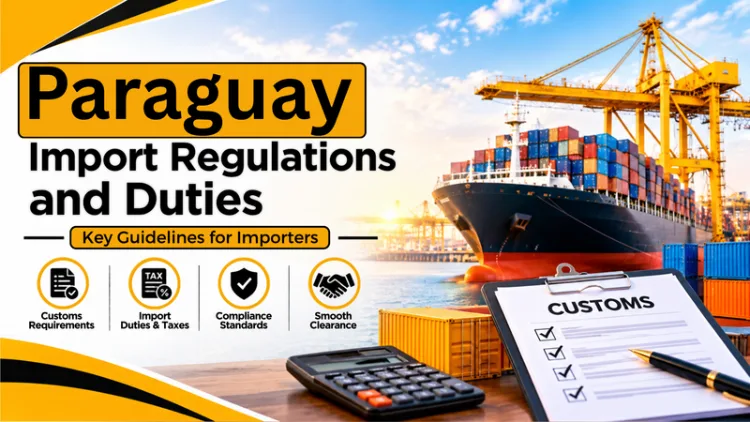
Importing agricultural machinery parts into Paraguay requires more than finding a reliable supplier. Importers and distributors must understand applicable customs duties, taxes, tariff classifications, documentation requirements and clearance procedures to calculate landed costs accurately and avoid shipment delays.
Whether you source three-point linkage parts, combine harvester components, tractor parts or farm implement replacement parts, the applicable import charges depend on the product’s classification, customs origin and relevant regulations. This guide explains the key requirements businesses should verify before shipping agricultural machinery parts to Paraguay.
What Are the Import Duties on Agricultural Machinery Parts in Paraguay?
Paraguay bases its national import tariff on the MERCOSUR Common Nomenclature (NCM) and the MERCOSUR Common External Tariff (CET). The NCM follows the international Harmonized System (HS), which provides a standardized framework for classifying traded goods.
Paraguay’s published national tariff schedule includes multiple duty levels ranging from 0% to 35%. However, this is the range across the tariff schedule as a whole, not a specific duty range applicable to every agricultural machinery part. The correct rate must be verified against the product’s exact tariff classification and the rules in force at the time of importation.
For importers of agricultural machinery parts, the main considerations are:
- Customs duty: Determined by the applicable tariff line and any relevant preferential treatment or exceptions.
- Import taxes: VAT and any other applicable charges must be considered separately from customs duty.
- Customs valuation: The declared value and applicable valuation rules influence the calculation of import charges.
Businesses should consult Paraguay’s official national import tariff and confirm the applicable classification and rate with a qualified customs professional before shipping. The Ministry of Economy and Finance describes its published tariff schedule as a reference document, so it should not replace verification of the legally applicable measures.
How to Identify the Correct HS/NCM Code for Agricultural Machinery Parts
Correct tariff classification is one of the most important steps when importing farm machinery parts into Paraguay. Similar-looking components may fall under different tariff headings depending on their function, material, design and intended application.
For example, three-point linkage components, harvester knife guards, disc blades, tiller blades, rasp bars, hammer blades, pins, bolts and bushes should not automatically be assigned the same HS/NCM code simply because they are used in agricultural machinery.
Before confirming an order, importers should:
- Obtain the product’s technical description, material specifications and intended function.
- Identify the relevant HS heading and corresponding NCM subheading.
- Verify the current Paraguayan tariff rate and any applicable import requirements.
- Seek a formal classification opinion where the classification is uncertain or commercially significant.
Accurate classification helps prevent incorrect duty calculations, customs queries and avoidable clearance delays.
What Taxes and Charges Apply When Importing Machinery Parts?
Customs duty is only one component of the total cost of importing agricultural machinery parts into Paraguay. Buyers should also account for applicable import VAT, freight, insurance, customs clearance and other shipment-related expenses.
Paraguay generally applies a standard VAT rate of 10%, alongside a reduced 5% rate for specified transactions and goods. Importers should verify the applicable VAT treatment for their particular products rather than assume that agricultural machinery parts qualify for a reduced rate.
The overall landed cost may include:
- Customs duty: Based on the applicable tariff classification and customs value.
- Import VAT: Calculated under the applicable tax rules and assessment base.
- Freight and insurance: Included in the shipment cost and potentially relevant to customs valuation.
- Clearance and handling charges: Including applicable customs broker, terminal and logistics fees.
To estimate costs reliably, buyers should obtain a product-level quotation, confirm the customs valuation method and request a landed-cost estimate before dispatch. Paraguay’s Ministry of Economy and Finance and National Directorate of Tax Revenue (DNIT) are useful starting points for verifying the relevant tariff and tax rules.
What Documents Are Required for Customs Clearance in Paraguay?
Importers should prepare the required documentation before agricultural machinery parts are dispatched.
Although the exact requirements depend on the goods and transaction, the usual commercial and transport documents include:
- Commercial invoice with accurate product descriptions, quantities, values and country-of-origin details.
- Packing list specifying the contents of each package.
- Bill of lading or air waybill, depending on the transport method.
- Applicable certificate of origin and supporting documents when preferential tariff treatment is claimed.
- Any additional permits, certificates or technical documents required for the particular goods.
Importers should also confirm their registration and declaration requirements, as well as arrangements for customs representation where applicable.
Paraguay’s DNIT provides information on customs procedures and the Ventanilla Única del Importador (VUI), or Importer Single Window. Its customs systems and official guidance can help businesses understand the applicable declaration and clearance process.
Working with a qualified Paraguayan customs broker can help importers validate documentation, confirm tariff classifications and identify potential compliance issues before shipment.
How Does Country of Origin Affect Import Duties?
The country from which agricultural machinery parts are shipped is not necessarily their country of origin for customs purposes. Origin is determined under the applicable rules, which may consider where a product was manufactured or whether it underwent sufficient processing.
Preferential tariffs may be available for eligible goods under relevant trade agreements, subject to product-specific rules of origin and documentary requirements.
Importers should therefore verify whether their parts qualify for preferential treatment before including any reduced duty in their cost calculations. A shipment routed through a MERCOSUR country does not automatically qualify for preferential rates.
How Can Importers Reduce Customs Delays and Control Costs?
For agricultural machinery parts distributors, unexpected duties and clearance delays can disrupt inventory planning and customer commitments. A structured pre-shipment process helps reduce these risks.
Before placing an order, businesses should:
- Confirm tariff classification: Verify the correct HS/NCM code and applicable duty for every product category.
- Calculate landed costs: Account for customs duty, VAT, freight, insurance and clearance expenses.
- Validate documents: Ensure invoices, packing lists and origin documents are accurate and consistent.
- Check special requirements: Confirm whether any permits, product-specific restrictions or additional certificates apply.
- Coordinate with the supplier and customs broker: Share technical specifications and shipment details early to resolve questions before dispatch.
For bulk procurement, requesting clear product descriptions, part references and consistent documentation from the supplier can also simplify classification and repeat-order planning.
Conclusion
Importing agricultural machinery parts into Paraguay becomes more predictable when businesses verify tariff classifications, taxes, origin requirements and customs documentation before shipment. For international buyers, choosing a reliable supplier that can provide clear product specifications and consistent export documentation is an important part of effective procurement.
Looking for agricultural machinery parts for your distribution or sourcing requirements? Explore JCBL Agri for three-point linkage parts, harvester components and farm implement replacement parts, or contact our team to discuss your requirements.
Regulatory note: Import duties and tax rules may change. Confirm the current requirements with Paraguay’s competent authorities or a qualified customs professional before making import decisions.
FAQs
There is no single duty rate for all agricultural machinery parts. The applicable rate depends on the product’s NCM classification, origin and relevant tariff measures. Verify the rate against Paraguay’s current official tariff schedule.
Import VAT generally applies, but the applicable rate and calculation depend on the relevant tax provisions. Confirm the treatment of the specific product with DNIT or a qualified customs professional.
Importers should confirm the applicable customs representation and declaration requirements for their transaction. A qualified local customs broker can help manage classification, documentation, tax calculations and clearance procedures.
Identify the correct NCM code, verify the customs duty and VAT, and account for freight, insurance, clearance and other applicable charges. Obtain a shipment-specific estimate before dispatch.