
 (+91) 842-700-1426
  agriparts@jcblmail.com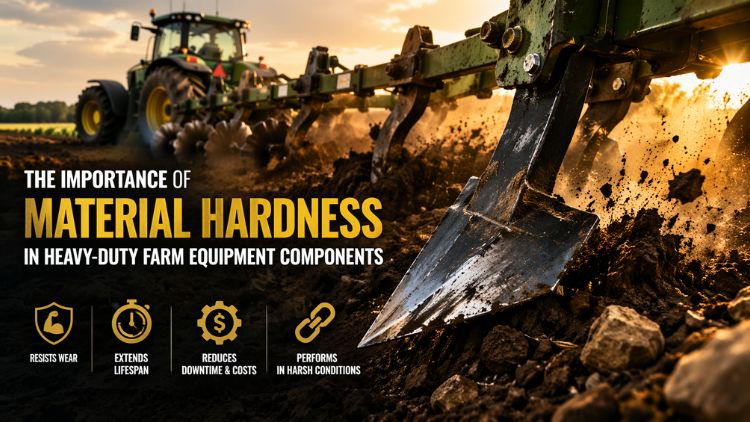
In modern agriculture, downtime isn’t just inconvenient; it’s expensive. During a critical 7–10 day planting window, equipment failure can cost thousands of dollars per hour in lost yield potential. When a plowshare wears out, or a cultivator tine shatters mid-operation, the root cause, like incorrect material hardness, is often overlooked.
Today’s high-horsepower tractors and advanced machinery place significantly greater stress on components than older equipment ever did. This makes material hardness more critical now than ever before.
From resisting soil scouring to maintaining edge retention under constant shearing forces, material hardness determines whether your equipment survives the field or fails in it.
What is Material Hardness?
Material hardness is the ability of a material to resist wear, deformation, and surface damage under mechanical stress such as friction, impact, and pressure.
It is commonly measured using standardized scales:
- Rockwell Hardness (HRC): Widely used for hardened steels
- Brinell Hardness (HB): Used for softer or bulk materials
Material hardness is the measure of a material’s resistance to wear, deformation, and surface damage, typically expressed in HRC or HB scales.
Why Material Hardness is Critical in Heavy-Duty Farm Equipment
1. Resistance to Abrasive Soil Conditions
Agricultural fields often contain sand, stones, and debris that constantly grind against equipment surfaces. Components with higher hardness:
- Resist surface wear
- Maintain functional shape longer
- Perform consistently in abrasive environments
2. Ability to Withstand Heavy Loads and Impact
Farm machinery like tractors and tillage tools experience repeated impact and high stress. Proper hardness ensures:
- Minimal deformation under load
- Better load distribution
- Reduced structural fatigue
3. Extended Component Lifespan
Harder materials wear slower, which leads to:
- Longer service intervals
- Reduced replacement frequency
- Improved return on investment (ROI)
4. Reduced Downtime and Maintenance Costs
Frequent breakdowns can halt operations during critical farming periods. Optimal hardness:
- Minimizes unexpected failures
- Reduces maintenance cycles
- Lowers overall operational costs
5. Consistent Performance in Harsh Environments
Equipment must perform reliably across:
- Wet and dry soil conditions
- Rocky or sandy terrains
- Continuous usage cycles
Proper hardness ensures consistent efficiency regardless of the environment.
Real-World Impact: Where Hardness Makes a Difference
Material hardness directly affects the performance of key farm equipment components:
- Plowshares: High hardness prevents rapid edge wear in abrasive soil
- Harrow Discs: Maintains cutting efficiency over long usage
- Cultivator Tines: Reduces bending and surface wear
- Gears & Shafts: Prevents surface fatigue and prolongs mechanical life
- Cutting Blades: Retains sharpness for efficient operation
Insight: Even a small increase in hardness can significantly reduce wear rates in high-contact components.
Consequences of Incorrect Material Hardness
Choosing the wrong hardness level can lead to serious operational issues:
If the material is Too Soft:
- Rapid wear and erosion
- Frequent replacements
- Increased operational costs
If Material is Too Hard:
- Brittleness and cracking
- Sudden component failure
- Reduced impact resistance
Key Takeaway: Incorrect hardness doesn’t just reduce performance-it can cause complete equipment failure.
The Balance Between Hardness and Toughness
While hardness improves wear resistance, toughness ensures the material can absorb impact without breaking.
- High hardness + low toughness → brittle failure
- Low hardness + high toughness → excessive wear
Example:
- Rocky soil → requires tougher materials to absorb impact
- Sandy soil → requires higher hardness for abrasion resistance
Best practice: Use a balanced combination of hardness and toughness based on application conditions.
Material Selection: Why Alloy Choice Matters
Not all steels are equal. Industry-preferred materials include:
Boron Steel
- Excellent hardenability
- Achieves high HRC levels after heat treatment
- Ideal for plowshares and blades
Manganese Steel
- Known for work hardening
- Becomes harder under repeated impact
- Perfect for rocky environments
Why They Are Gold Standard
- Maintain hardness under stress
- Offer superior wear resistance
- Adapt to real-world field conditions
How Manufacturers Achieve Optimal Hardness
To ensure components perform reliably, manufacturers use controlled processes such as the following
Heat Treatment Techniques
- Quenching: Increases hardness by rapid cooling
- Tempering: Reduces brittleness while maintaining strength
Surface Hardening Methods
- Induction hardening
- Case hardening
These processes allow manufacturers to:
- Harden outer surfaces for wear resistance
- Maintain a tough inner core for impact absorption
How to Choose the Right Hardness for Farm Equipment Components
Selecting the correct hardness depends on real-world usage conditions:
Key Factors to Consider:
- Soil Type:
- Sandy: Higher hardness needed
- Rocky: Balance of hardness and toughness
- Load Conditions:
- High load: Requires stronger, tougher materials
- Type of Operation:
- Cutting/tilling: Higher wear resistance
- Load-bearing: Balanced properties
- Usage Frequency:
- Continuous use: Higher durability required
Selection Checklist
- Analyze soil composition
- Evaluate load and stress levels
- Match hardness to component function
- Consider usage frequency
- Balance hardness with toughness
Why Hardness Directly Impacts Cost Efficiency
In real-world farming operations, material hardness has a measurable economic impact:
- Harder components can last 2–3 times longer in abrasive conditions
- Reduced wear leads to lower replacement and labor costs
- Improved reliability minimizes downtime during critical farming seasons
Investing in correctly hardened components upfront significantly reduces long-term operational expenses.
Conclusion
Material hardness is not just a technical specification; it is a critical factor that determines the durability, efficiency, and cost-effectiveness of heavy-duty farm equipment.
From resisting abrasive soil conditions to maintaining structural integrity under heavy loads, the right hardness ensures that components perform reliably over time. However, achieving the correct balance between hardness and toughness is essential to avoid premature wear or sudden failure.
Selecting the right material hardness is a strategic decision that directly impacts equipment lifespan, maintenance costs, and overall farming productivity.
FAQs
Material hardness improves wear resistance, prevents deformation, and extends the lifespan of components used in harsh agricultural conditions.
Excessive hardness can make materials brittle, leading to cracks or sudden failure under impact.
Low hardness results in rapid wear, reduced efficiency, and frequent component replacement.
Higher hardness reduces surface wear caused by friction and abrasive particles like sand and soil.
The ideal hardness depends on application, soil type, and load conditions, typically requiring a balance between hardness and toughness.