 (+91) 842-700-1426
  agriparts@jcblmail.com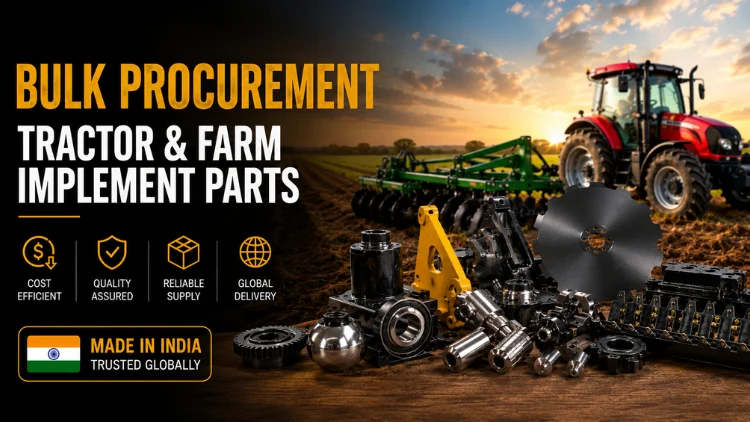
Bulk procurement of tractor and farm implement parts refers to purchasing components like filters, blades, and hydraulic parts in large quantities from manufacturers or suppliers. It helps businesses reduce costs, ensure consistent quality, and maintain uninterrupted operations.
This guide is designed for distributors, exporters, OEM buyers, and farm equipment dealers looking to optimize sourcing, improve supply chain reliability, and make informed bulk purchasing decisions.
What Does Bulk Procurement Mean in Agriculture?
Bulk procurement in agriculture refers to purchasing tractor spare parts and farm implement components in large volumes directly from manufacturers or wholesale suppliers.
Unlike retail sourcing, bulk purchasing focuses on:
- Long-term supply agreements
- Volume-based pricing
- Consistent product specifications
This model is widely used for:
- Bulk tractor parts supply
- Agricultural spare parts wholesale
- Farm equipment parts bulk purchase
It is especially critical in regions with high agricultural dependency, where equipment uptime directly affects productivity.
Key Categories of Tractor and Farm Implement Parts to Buy in Bulk
For effective bulk procurement, B2B buyers should focus on parts that have high replacement frequency, consistent demand, and operational importance. The following categories are the most suitable for bulk purchasing:
Combine Harvester Parts
Combine harvester components are critical during harvesting seasons, where equipment performance directly impacts productivity.
Common parts include:
- Rasp bars and threshing components
- Cutter blades and guards
- Concaves and sieves
Since these parts undergo heavy usage, bulk procurement ensures consistent performance, reduced downtime, and uninterrupted harvesting operations.
Farm Implements Replacement Parts
Farm implements are regularly exposed to tough working conditions, leading to frequent wear and replacement needs.
Common parts include:
- Rotavator blades
- Cultivator tines
- Disc harrow components
Bulk sourcing of these parts helps maintain steady inventory levels and cost efficiency during peak farming cycles.
Three-Point Linkage Kit Parts
Three-point linkage systems are essential for connecting tractors with various implements, making them a key category for bulk buyers.
Typical components include the following:
- Top links and lower links
- Linkage pins and bushes
- Stabilizers and connectors
Ensuring availability of these parts in bulk supports smooth implement attachment, operational safety, and equipment versatility.
Tractor Utility and Accessory Parts
These parts enhance the functionality, safety, and usability of tractors across different applications.
Common items include:
- Drawbars and towing components
- Hitch systems and mounting accessories
- Protective and support components
Bulk sourcing of tractor utility and accessory parts helps distributors and dealers meet diverse customer requirements while maintaining consistent product availability.
Benefits of Bulk Procurement for B2B Buyers
Bulk procurement is not just about buying in larger quantities; it directly impacts cost control, operational efficiency, and long-term business stability. Here’s how:
Cost Efficiency
Buying in bulk allows businesses to significantly reduce overall procurement costs.
- Lower per-unit pricing through volume discounts
- Fewer purchase cycles, reducing administrative and logistics costs
- Stronger negotiation power with manufacturers
Why it matters: Lower costs improve margins for distributors and exporters, especially in price-sensitive markets.
Supply Chain Stability
Reliable access to parts is critical during peak agricultural seasons.
- Consistent inventory availability
- Reduced risk of stockouts during high-demand periods
- Better planning for seasonal and large-scale operations
Why it matters: Prevents equipment downtime and ensures uninterrupted service for end customers.
Consistent Quality Assurance
Maintaining uniform quality across all parts is essential for performance and trust.
- Parts sourced from the same production batches
- Standardized specifications across orders
- Reduced chances of compatibility issues
Why it matters: Ensures reliable equipment performance and reduces returns or complaints.
Strong Supplier Relationships
Bulk procurement helps build long-term partnerships with reliable suppliers.
- Access to long-term contracts and stable pricing
- Priority in production and faster dispatch
- Opportunities for customization and OEM support
Why it matters: Strong relationships lead to better service, flexibility, and competitive advantage in the market.
How to Choose the Right Bulk Supplier
Choosing the right supplier is critical in bulk procurement, as it directly affects product quality, delivery timelines, and long-term business reliability. Instead of evaluating suppliers on price alone, B2B buyers should assess the following key factors:
Manufacturing Capabilities
Start by understanding whether the supplier is a manufacturer or a trader.
- Manufacturers offer better control over production quality and timelines
- In-house facilities allow for consistent output and customization
- Traders may have limited control over quality and supply consistency
What to check: Production capacity, machinery, and ability to handle large-volume orders.
Certifications and Quality Standards
Certifications are a strong indicator of a supplier’s credibility and process reliability.
- ISO certifications for quality management
- Export compliance and product standard certifications
- Adherence to international manufacturing benchmarks
What to check: Valid certification documents and quality control processes.
Experience in Global Markets
Suppliers with export experience are better equipped to handle international B2B requirements.
- Understanding of region-specific standards and specifications
- Experience with export documentation and compliance
- Knowledge of packaging and shipping requirements
Key markets to look for experience in: Africa, Middle East, and Southeast Asia.
What to check: Export history, client base, and regions served.
Customization and OEM Support
For distributors and exporters, customization is often essential to meet market needs.
- Product modifications based on regional demand
- Private labeling and branding options
- OEM manufacturing support for bulk buyers
What to check: Flexibility in design, branding capabilities, and minimum customization requirements.
Logistics and Delivery Capability
Efficient logistics are crucial for timely delivery of bulk orders.
- Ability to manage large shipments without delays
- Strong packaging to prevent damage during transit
- Reliable shipping timelines and coordination
What to check: Delivery track record, packaging standards, and logistics partnerships.
Bulk Procurement Checklist
Before finalizing a supplier, use this checklist:
- Verify supplier credentials and manufacturing capabilities
- Request product samples for quality evaluation
- Compare pricing across multiple suppliers
- Check Minimum Order Quantity (MOQ) requirements
- Confirm packaging, shipping, and delivery timelines
- Evaluate after-sales support and communication
This checklist helps reduce risk and ensures informed decision-making.
Common Challenges in Bulk Procurement (and How to Avoid Them)
Bulk procurement offers significant advantages, but it also comes with risks that can impact cost, quality, and delivery timelines. Understanding these challenges helps buyers make more informed decisions.
Inconsistent Quality
Variations in product quality across batches can lead to equipment failure, increased returns, and loss of customer trust.
How to avoid it:
- Work with certified manufacturers with proven quality control systems
- Request batch samples before confirming large orders
- Ensure clear product specifications and standards are documented
Delayed Shipments
Late deliveries can disrupt inventory planning and cause downtime, especially during peak agricultural seasons.
How to avoid it:
- Partner with suppliers who have strong logistics and export experience
- Confirm realistic production and delivery timelines in advance
- Include delivery schedules in contracts or purchase agreements
Poor Communication
Lack of clear communication can result in order errors, delays, and misunderstandings about specifications or timelines.
How to avoid it:
- Choose suppliers with dedicated B2B or export support teams
- Establish clear communication channels and points of contact
- Regular updates on order status and dispatch
Hidden Costs
Unexpected costs such as shipping, duties, or packaging can significantly increase the total procurement cost.
How to avoid it:
- Request a complete cost breakdown before finalizing orders
- Clarify Incoterms (FOB, CIF, etc.) and payment terms
- Confirm what is included in pricing (packaging, transport, documentation)
Why India is a Leading Hub for Bulk Agricultural Parts Supply
India has emerged as a global hub for agricultural parts manufacturing due to several advantages:
1. Cost-Effective Production: Lower manufacturing costs allow competitive pricing without compromising quality.
2. Strong Manufacturing Ecosystem: India has a well-established network of:
- Tractor parts manufacturers
- Agricultural implement producers
- OEM suppliers
3. Skilled Workforce and Engineering Expertise: Experienced labor and technical expertise ensure high-quality production standards.
4. Export Capabilities: India exports agricultural parts to:
- Africa
- Middle East
- Southeast Asia
This makes it a preferred sourcing destination for global buyers.
Conclusion
Bulk procurement of tractor and farm implement parts is a strategic investment for B2B buyers aiming to improve cost efficiency, ensure consistent supply, and maintain equipment reliability.
By selecting the right supplier, verifying quality standards, and following a structured procurement process, businesses can build a resilient and scalable supply chain.
If you’re looking to streamline your sourcing process, reduce costs, and partner with a reliable manufacturer, now is the time to explore bulk procurement opportunities and strengthen your competitive edge in the agricultural industry.
FAQs
Commonly procured parts include filters, clutch components, brake parts, rotavator blades, and hydraulic components. These parts have high replacement frequency, making them suitable for bulk purchasing.
Ensure quality by sourcing from certified manufacturers, requesting product samples, and verifying production standards. Working with experienced exporters also helps maintain consistency.
MOQ varies depending on the supplier and product type, but bulk buyers typically negotiate flexible quantities based on long-term agreements and order frequency.
Yes, many manufacturers offer OEM and customization services, including branding, packaging, and product specifications tailored to different market requirements.