
 (+91) 842-700-1426
  agriparts@jcblmail.com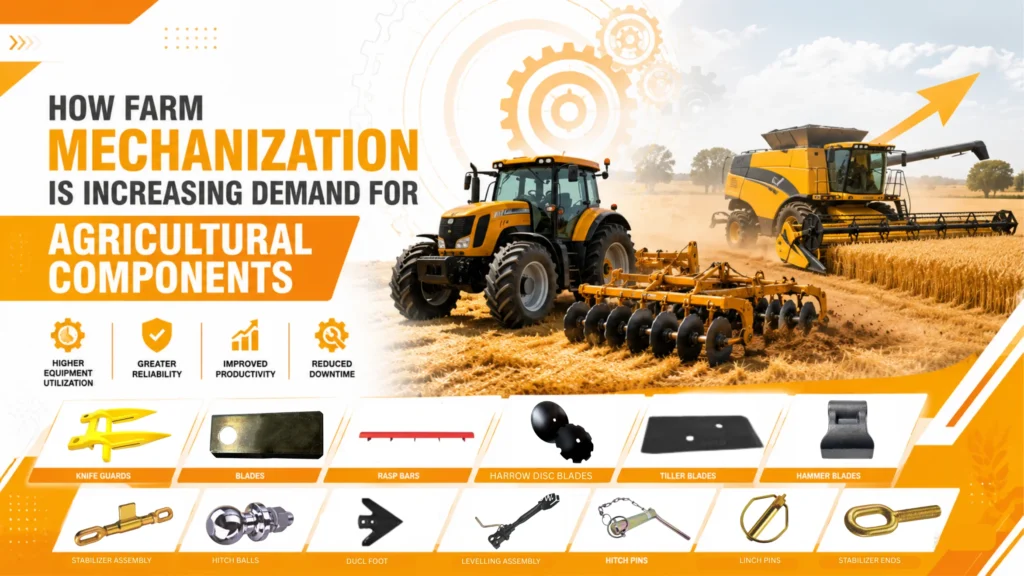
Farm mechanization is increasing demand for agricultural components as tractors, harvesters, tillage machinery, and agricultural implements are used more intensively across modern farming operations. Higher equipment utilization leads to greater wear, increased maintenance requirements, and more frequent replacement of critical components.
As a result, demand continues to grow for harvesting components, tillage parts, linkage systems, and fastening solutions that help maintain equipment reliability, operational efficiency, and uninterrupted field performance. This trend is making replacement agricultural components an increasingly important part of modern mechanized farming.
How Farm Mechanization Is Expanding Agricultural Component Demand
Farm mechanization refers to the use of machinery and equipment to perform agricultural operations more efficiently and productively. Driven by labor shortages, rising productivity demands, and the expansion of commercial farming, mechanized equipment is now central to field preparation, harvesting, and implement-based operations.
As machinery takes on a larger role in daily farming activities, operating hours increase and equipment is exposed to greater workloads. This directly affects the lifespan of agricultural components and accelerates replacement cycles across multiple equipment systems.
| Operational Factor | Impact on Component Demand |
| Extended operating hours | Faster component wear |
| Larger cultivated areas | Increased equipment utilization |
| Intensive field operations | Greater mechanical stress |
| Seasonal workloads | Higher component fatigue |
| Preventive maintenance practices | More scheduled replacements |
Modern agricultural equipment operates in challenging environments where soil abrasion, crop residue, vibration, moisture, and heavy loads continuously affect component performance. As a result, replacement parts have become essential for maintaining machinery efficiency and reducing downtime.
Harvesting Components Experience Continuous Operational Wear
Harvesting is one of the most time-sensitive farming activities, making equipment reliability a critical requirement during peak seasons. Components such as knife guards, blades, and rasp bars are directly involved in crop processing and remain under constant operational stress throughout harvesting cycles.
Continuous exposure to abrasion, impact, and crop material gradually affects component performance. As harvesting equipment covers larger acreages and operates for longer periods, regular inspection and replacement become necessary to maintain harvesting efficiency and avoid costly interruptions.
For agricultural businesses, dependable harvesting components help maximize equipment uptime and support uninterrupted field operations when timing is most critical.
Tillage Operations Drive Demand for Soil-Engaging Components
Tillage equipment operates under some of the harshest conditions in agriculture, placing significant stress on soil-engaging components. Disc blades, tiller blades, and hammer blades work directly against abrasive soil conditions, making wear an unavoidable part of normal operation.
The intensity of land preparation activities, combined with increasing machinery utilization, creates ongoing demand for replacement tillage components. Maintaining these parts is essential for preserving field preparation quality, operational efficiency, and overall equipment performance.
As farms continue to optimize cultivation practices and increase productivity, demand for durable tillage components is expected to remain strong.
Increased Usage of Implement Is Expanding Demand for Linkage Components
Modern farming relies on a wide range of implements for different agricultural operations. The performance of these implements depends heavily on linkage systems that connect them to tractors and support effective load transfer during operation.
Components such as top links, lift arms, draw bars, and linkage assemblies are subjected to repeated mechanical loads as equipment utilization increases. Their reliability directly influences implement stability, operational control, and overall field performance.
As mechanization encourages greater use of agricultural implements, demand for replacement linkage components continues to grow alongside equipment usage.
Fastening Components Remain Essential for Equipment Reliability
Fastening components play a critical role in maintaining secure equipment connections throughout agricultural operations. Hitch pins, lynch pins, agricultural pins, and related fastening solutions are used extensively across tractors and implements to support safe and reliable performance.
Although relatively small compared to larger machinery assemblies, these components experience continuous vibration, environmental exposure, and operational loading. Their condition directly affects equipment stability and attachment reliability.
As machinery operates more frequently and implements are changed more often, the replacement demand for fastening components naturally increases.
How Preventive Maintenance Supports Mechanized Farming
As farm mechanization advances, preventive maintenance is becoming increasingly important for maintaining equipment availability and reducing unexpected downtime. Rather than waiting for failures to occur, many agricultural operations now follow planned inspection and replacement schedules to ensure consistent machinery performance.
This approach is particularly important for harvesting components, tillage parts, linkage systems, and fastening components that experience regular wear during operation. Replacing components before they fail helps improve equipment uptime, reduce maintenance disruptions, and support more predictable operating costs.
Preventive maintenance also reinforces the importance of durable replacement components capable of performing reliably under demanding agricultural conditions.
Conclusion
Farm mechanization is transforming agriculture by increasing reliance on machinery-driven productivity and operational efficiency. As tractors, harvesters, tillage equipment, and agricultural implements operate for longer hours and perform more demanding tasks, the need for reliable agricultural components continues to grow.
Harvesting components, tillage parts, linkage systems, and fastening solutions all play a vital role in maintaining equipment performance and supporting uninterrupted field operations. Combined with the growing adoption of preventive maintenance practices, this shift is driving sustained demand for high-quality replacement agricultural components across modern farming operations.
As mechanized farming continues to expand, agricultural components will remain essential for maximizing equipment reliability, productivity, and long-term operational efficiency.
FAQs
Farm mechanization increases demand for agricultural components because equipment operates for longer hours, handles heavier workloads, and requires regular maintenance to maintain productivity. Increased machine utilization leads to faster wear and more frequent replacement of critical components.
Harvesting components such as knife guards, blades, and rasp bars, along with tillage components like disc blades, tiller blades, and hammer blades, typically experience the highest wear because they operate under continuous field contact and demanding working conditions.
Preventive maintenance increases demand for agricultural components by encouraging planned inspections and timely replacements before failures occur. This helps reduce downtime, improve equipment reliability, and maintain consistent field performance.
Linkage components such as top links, lift arms, draw bars, and linkage assemblies are essential because they connect tractors to implements, support load transfer, and help maintain equipment stability during field operations.
High-quality agricultural components help improve equipment reliability, reduce unplanned downtime, extend service life, and maintain operational efficiency, making them essential for productive and cost-effective farming operations.