 (+91) 842-700-1426
  agriparts@jcblmail.com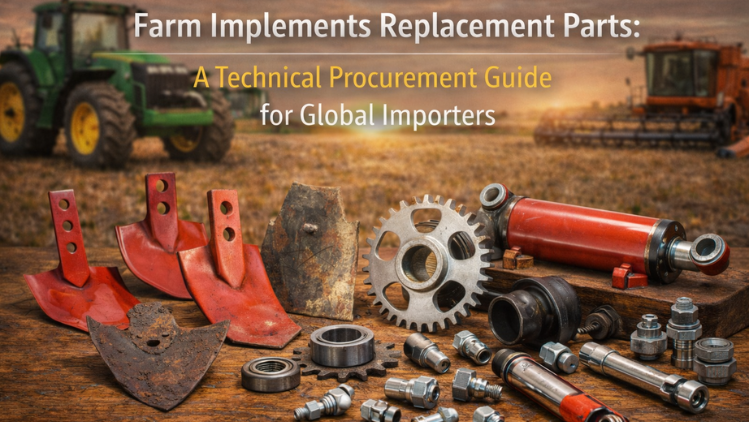
Farm implements replacement parts are high-wear steel components used in tillage and soil preparation machinery such as disc harrows, MB ploughs, and rotary tillers. Typically manufactured from boron or high-carbon steel and hardened to 38–52 HRC, they are designed to withstand abrasion, torque stress, and impact in agricultural operations. Global distributors must evaluate material grade consistency, hardness control, dimensional precision, and export readiness before bulk procurement. This guide outlines the key technical and sourcing benchmarks for reliable long-term supply partnerships. Overview of Farm Implements Replacement Parts Farm implements replacement parts are periodically replaced, including soil-engaging and structural components that experience mechanical wear during agricultural field operations. These parts directly influence field productivity, fuel efficiency, and implement longevity. The importance of durable replacement components is reinforced by strong global market expansion. According to Grand View Research, the farm implements market was valued at USD 33.91 billion in 2024 and is projected to reach USD 61.18 billion by 2033, growing at a CAGR of 7.1%. The Asia Pacific accounted for 36.7% of global revenue in 2024, reflecting the region’s high demand for mechanization, while Europe remains one of the fastest-growing markets. As agricultural enterprises scale operations and adopt precision and high-capacity equipment, equipment utilization hours increase, accelerating wear cycles and replacement frequency. The trend toward commercial and large-scale farming further intensifies this demand. The expansion of cultivated areas and increasing tractor penetration globally have led to a greater dependency on mechanized tillage and soil preparation systems. Since tractors function as the primary power source for cultivators, harrows, and plough assemblies, higher tractor usage directly drives replacement demand for compatible blades, axles, and structural components. Why Wear Occurs Wear in farm implement components occurs due to abrasive soil friction, impact loading, high torque stress during deep tillage, and moisture-induced corrosion. Soil composition significantly affects wear rates. Sandy soils accelerate edge erosion, while clay-heavy soils increase structural load stress and torque resistance. In intensive operations, replacement cycles typically range between 250 and 400 working hours, depending on soil type, operating depth, and equipment load. For importers, uniform hardness distribution, metallurgical consistency, and dimensional compatibility remain critical to ensuring performance reliability across batches and markets. Key Categories of Farm Implements Parts Farm implement replacement demand is concentrated around high-wear soil-engaging and structural components that directly influence durability, load-bearing performance, and field productivity. The following categories represent the most commonly sourced parts in global trade. Hammer Blades Hammer blades are used in rotary tillers and flail implements for soil breaking and residue management. Typically manufactured from boron or alloy steel and hardened to 38–45 HRC, they require high impact resistance and fatigue strength for continuous operation. Disc Harrow Blades Disc harrow blades are the primary soil-cutting components used in secondary tillage operations. Commonly produced from 30MnB5 boron steel with 48–52 HRC hardness, they are available in 4–8 mm thickness and 16″–24″ diameters for abrasive conditions. MB Plough / Tillage Blades MB plough and tillage blades are designed for deep soil inversion and high-penetration primary tillage. Manufactured from boron or high-carbon steel with 48–52 HRC hardness, they balance wear resistance and structural toughness in heavy-duty applications. Disc Harrow Axles Disc harrow axles support blade assemblies and withstand rotational and torsional loads during operation. Produced from high-strength alloy steel, they require precise machining, high tensile strength, and load-tested durability for long service life. Implements & General Pins Implements and general pins maintain alignment and secure mechanical assemblies under dynamic stress. Typically made from hardened alloy steel, they demand tight dimensional tolerances, corrosion resistance, and a controlled surface finish to prevent premature failure. Material Grades Used in Farm Implements Parts Material grade selection directly impacts wear resistance, toughness, and operational lifespan. Boron Steel (e.g., 30MnB5) High Carbon Steel Alloy Steel Comparison Insight:Boron steel provides higher hardenability and improved wear resistance at similar hardness levels compared to conventional high-carbon steel, while maintaining better structural toughness. In high-abrasion environments, boron steel with controlled heat treatment typically offers the best balance of wear resistance and structural durability. For detailed specifications and performance comparisons, refer to our comprehensive agricultural machinery replacement parts guide. Heat Treatment & Hardness Standards The ideal hardness range for most tillage blades is between 38–52 HRC, achieved through controlled quenching and tempering processes. Common Processes Hardness Range Typical hardness range for tillage blades: 38–52 HRC (Rockwell Hardness Scale). Uniform hardness is critical. Inconsistent hardening can cause: Proper distortion control during quenching ensures dimensional stability. Quality Inspection & Testing Protocol Reliable manufacturers follow documented inspection processes aligned with global quality control standards. Standard Checks Include: Importers should request inspection reports before shipment confirmation. Technical Comparison Table Part Type Material Grade Hardness (HRC) Primary Application Disc Harrow Blade 30MnB5 Boron Steel 48–52 Soil cutting Tillage Blade Boron/High Carbon 48–52 Deep tillage Hammer Blade Alloy/Boron Steel 38–45 Rotary tilling Axle Alloy Steel As per load design Structural support Bulk Procurement Considerations for Importers When sourcing in volume, importers should evaluate: Partnering with a trusted bulk farm implement parts supplier improves cost efficiency and supply chain stability. Export Packaging & Anti-Corrosion Protection Tillage components are vulnerable to rust during sea freight. Recommended export measures include: HS Code classification typically falls under 8432 (agricultural or horticultural machinery parts). Proper packaging ensures corrosion resistance during long transit cycles. Why Source Farm Implements Replacement Parts from India India has become a preferred sourcing destination due to: Indian suppliers offer diverse SKU ranges, private labeling capabilities, and consolidated container shipments for global distributors. How to Evaluate a Reliable Manufacturer When selecting an agricultural implement parts manufacturer from India, importers should assess: Supplier audits reduce procurement risk and ensure long-term reliability. Conclusion Farm implement replacement parts directly influence agricultural efficiency, machine uptime, and operating costs. For global importers, successful procurement depends on material grade validation, controlled heat treatment, rigorous inspection protocols, and export-ready packaging. Working with a technically capable manufacturer with in-house testing and export expertise ensures consistent quality across batches and markets. For bulk inquiries, private labeling requirements, or technical specification discussions, connect with an experienced… Continue reading Farm Implements Replacement Parts: A Technical Procurement Guide for Global Importers