
 (+91) 842-700-1426
  agriparts@jcblmail.com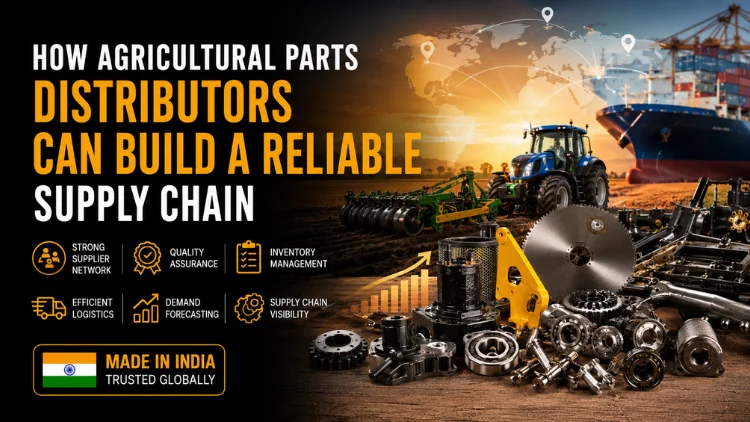
A reliable supply chain is essential for agricultural parts distributors to ensure consistent product availability, timely delivery, and quality assurance, especially during peak farming seasons. It directly impacts business continuity, customer satisfaction, and long-term B2B relationships.
However, challenges such as supplier inconsistency, fluctuating demand, logistics delays, and quality variations can disrupt operations. To stay competitive in domestic and global markets, distributors must adopt structured strategies that improve supply chain resilience, reduce risks, and enhance overall efficiency.
This guide covers practical approaches to help agricultural parts distributors build a stable and scalable supply chain.
What Is a Reliable Supply Chain in Agricultural Parts Distribution?
A reliable agricultural parts supply chain ensures consistent product availability, quality assurance, timely delivery, and cost efficiency. It relies on strong supplier networks, demand forecasting, inventory control, and efficient logistics to minimize disruptions and meet seasonal demand.
Key elements include the following:
- Consistent and verified suppliers
- Standardized quality control processes
- Predictable lead times
- Scalable logistics and warehousing
Why Supply Chain Reliability Is Critical for Agricultural Parts Distributors
A reliable supply chain directly impacts business performance and customer trust in the agricultural sector.
Key reasons include:
- Minimized downtime: Farmers depend on timely part replacements during sowing and harvesting seasons
- Stronger dealer relationships: Reliable supply builds long-term B2B partnerships
- Improved profitability: Reduced delays and returns lower operational costs
- Competitive advantage: Consistent delivery differentiates distributors in global markets
Failure to ensure supply chain stability can result in missed contracts, delayed shipments, and reputational damage.
Key Challenges in Agricultural Parts Supply Chains
Agricultural parts distributors face a range of operational and external challenges that can disrupt supply chain efficiency, impact delivery timelines, and affect overall business reliability, especially in highly seasonal and globally connected markets.
- Seasonal Demand Volatility: Demand for agricultural spare parts fluctuates heavily based on crop cycles, making forecasting difficult.
- Supplier Inconsistency: Variations in supplier capacity, pricing, and reliability can disrupt procurement plans.
- Logistics and Transportation Delays: Port congestion, customs clearance issues, and regional infrastructure gaps can delay shipments.
- Quality Variability in Spare Parts: Inconsistent manufacturing standards lead to product failures, returns, and loss of trust.
- Global Trade and Compliance Issues: Export regulations, tariffs, and documentation requirements add complexity to cross-border sourcing.
7 Proven Strategies to Build a Reliable Agricultural Parts Supply Chain
1. Diversify Your Supplier Base
Relying on a single supplier increases risk. Distributors should source from multiple manufacturers across different regions, such as India, China, and Turkey, to ensure continuity.
2. Partner with Certified and Experienced Manufacturers
Choose suppliers with:
- ISO certifications
- Proven export experience
- OEM or aftermarket specialization
This ensures consistent quality and compliance with international standards.
3. Implement Demand Forecasting and Data Analytics
Analyze historical sales data, seasonal trends, and customer buying patterns to predict demand for:
- Fast-moving tractor parts
- Combine harvester components
- Replacement implement parts
Accurate forecasting reduces stockouts and overstocking.
4. Maintain Optimal Inventory Levels
Use inventory segmentation strategies:
- Fast-moving parts: Maintain higher stock levels
- Slow-moving parts: Use controlled stocking
Establish safety stock thresholds to handle demand spikes.
5. Strengthen Logistics and Distribution Networks
Develop a flexible logistics system by:
- Partnering with reliable freight forwarders
- Using multi-location warehouses
- Planning for alternative shipping routes
This improves delivery timelines and reduces risk.
6. Standardize Quality Control Processes
Implement strict quality checks:
- Pre-shipment inspections
- Batch testing
- Supplier audits
Consistent quality reduces returns and enhances brand credibility.
7. Leverage Technology for Supply Chain Visibility
Adopt digital tools such as:
- ERP systems for inventory tracking
- Real-time shipment monitoring
- Supplier management platforms
Technology improves transparency and decision-making.
Best Practices for Global Sourcing of Agricultural Spare Parts
Global sourcing plays a key role in cost optimization and scalability.
Best practices include:
- Source from established manufacturing hubs: India is a leading exporter of tractor and farm implement parts due to cost efficiency and manufacturing expertise
- Balance cost and quality: Avoid low-cost suppliers without quality assurance
- Build long-term supplier relationships: Ensures priority production and stable pricing
- Ensure regulatory compliance: Understand import/export documentation and standards
How to Choose the Right Agricultural Parts Supplier
Use this checklist to evaluate suppliers:
- Proven experience in agricultural parts manufacturing
- Wide product range (tractor parts, combine parts, linkage components)
- International quality certifications
- Flexible minimum order quantities (MOQs)
- Strong export and logistics capabilities
- Transparent pricing and communication
Role of Inventory Management in Supply Chain Reliability
Efficient inventory management is central to a reliable supply chain.
Key considerations:
- Maintain safety stock for high-demand items
- Optimize warehouse layout for faster order processing
- Use data-driven inventory planning
- Regularly review stock turnover rates
Balancing inventory reduces both stockouts and excess storage costs.
Future Trends in Agricultural Supply Chains
Agricultural supply chains are evolving with technology and globalization.
Key trends include:
- Digital supply chain integration: Real-time data visibility
- AI-driven demand forecasting: Improved accuracy
- Regional manufacturing hubs: Reduced dependency on single regions
- Sustainable sourcing practices: Growing demand from global buyers
Conclusion
Building a reliable supply chain is a strategic priority for agricultural parts distributors aiming to scale in competitive B2B markets. Consistent product availability, dependable suppliers, efficient logistics, and strong quality control are the foundations of long-term success.
By diversifying sourcing, leveraging demand forecasting, optimizing inventory, and adopting digital tools, distributors can reduce risks and respond effectively to seasonal demand fluctuations. At the same time, forming strong partnerships with trusted manufacturers and logistics providers ensures greater stability across both domestic and global operations.
In a sector where timing and reliability directly impact farm productivity, a well-structured supply chain not only improves operational efficiency but also strengthens customer trust, repeat business, and overall market positioning.
FAQs
By diversifying suppliers, maintaining safety stock, implementing demand forecasting, and building strong logistics partnerships.
A hybrid approach combining local and international sourcing ensures cost efficiency, quality, and supply continuity.
It helps maintain product availability, reduces delays, and prevents overstocking, ensuring smooth operations.