
 (+91) 842-700-1426
  agriparts@jcblmail.com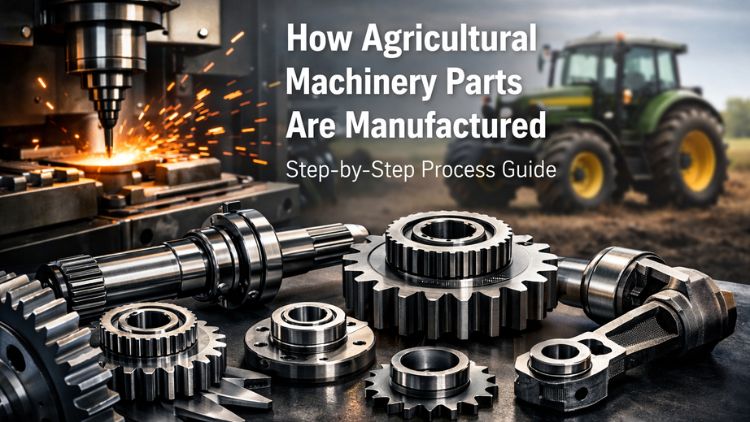
Agricultural machinery parts are manufactured through a multi-stage industrial process that includes design engineering, material selection, casting or forging, precision machining, heat treatment, surface finishing, and rigorous quality testing. Each stage is critical to ensure the components can withstand heavy loads, abrasive soil conditions, and prolonged exposure to moisture and chemicals.
From tractor transmission gears to harvester blades, the manufacturing process directly determines the durability, efficiency, and operational lifespan of agricultural equipment.
Key Takeaways
- Agricultural parts are manufactured using casting, forging, CNC machining, and heat treatment processes
- Material selection directly impacts strength, wear resistance, and longevity
- Forging produces stronger, fatigue-resistant components compared to casting
- CNC machining ensures tight tolerances and precision fit
- Heat treatment can increase component lifespan by 2–3x in high-wear conditions
- Surface coatings protect against corrosion, chemicals, and environmental damage
- Strict quality control ensures field reliability and performance consistency
Agricultural Machinery Parts Manufacturing Process (7 Key Steps)
- Design and engineering
- Material selection and procurement
- Casting or forging
- Machining and CNC processing
- Heat treatment
- Surface finishing and coating
- Quality control and testing
Raw Materials Used in Agricultural Machinery Parts
The performance of agricultural machinery parts begins with selecting the right raw materials. These materials must withstand high stress, abrasion, moisture, and temperature variations to ensure durability and consistent performance in demanding farming conditions.
1. Steel (Carbon & Alloy Steel)
Steel is the primary material used due to its high tensile strength and fatigue resistance. Alloy steels, in particular, are preferred for gears and shafts because they maintain hardness and structural stability under cyclic loads and high torque conditions.
2. Cast Iron
Cast iron is widely used for heavy-duty components due to its excellent wear resistance and vibration-damping properties. It performs well in engine housings and structural parts where rigidity and stability are essential.
3. Aluminum Alloys
Aluminum alloys offer a combination of lightweight construction and corrosion resistance, making them suitable for components where reducing machine weight improves fuel efficiency and handling.
4. Plastics & Composites
Engineering plastics and composites are used in non-load-bearing components due to their resistance to chemicals, moisture, and corrosion. These materials are especially useful in parts exposed to fertilizers and varying environmental conditions.
Why Material Selection Matters
Material choice directly affects component lifespan, performance, and maintenance frequency. Incorrect selection can lead to premature wear, deformation, or failure, particularly in high-load and abrasive agricultural applications.
Step-by-Step Manufacturing Process of Agricultural Machinery Parts
Each stage in the manufacturing process is designed to enhance strength, precision, and durability while ensuring consistent performance in real-world agricultural environments.
1. Design and Engineering
The process begins with CAD-based design and engineering, where components are modeled and analyzed for stress, load distribution, and fatigue resistance. This ensures the part is optimized for real operating conditions before production.
2. Material Selection and Procurement
Materials are selected based on mechanical requirements, environmental exposure, and cost efficiency, with sourcing from certified suppliers to maintain consistency and traceability.
3. Casting or Forging
Casting is used to produce complex geometries by pouring molten metal into molds, while forging shapes metal under high pressure to improve grain structure and mechanical strength. Forged components generally offer superior fatigue resistance and are preferred for high-stress applications.
4. Machining and CNC Processing
Machining processes such as turning, milling, and drilling refine the part to precise dimensions. CNC machining ensures tight tolerances (often within microns), enabling accurate fit, reduced vibration, and efficient mechanical performance.
5. Heat Treatment
Heat treatment processes such as hardening, tempering, and annealing modify the internal structure of metals to enhance hardness, toughness, and wear resistance. Properly treated components can achieve hardness levels suitable for high-friction agricultural operations.
6. Surface Finishing and Coating
Surface treatments such as powder coating, galvanizing, and plating protect components from corrosion, oxidation, and chemical exposure. This is essential for maintaining performance in soil, moisture, and fertilizer-rich environments.
7. Assembly (If Required)
Final components undergo rigorous inspection, including dimensional checks, load testing, and surface analysis. This ensures compliance with manufacturing standards and guarantees reliable performance in field conditions.
8. Quality Control and Testing
The final stage involves rigorous quality control and testing to ensure each part meets industry standards. This includes dimensional inspections, load and stress testing, surface quality checks, and performance validation. Thorough testing guarantees that the components will perform reliably under real agricultural working conditions.
Casting vs Forging: Which is Better for Agricultural Parts?
Casting and forging serve different purposes in agricultural machinery manufacturing, and the choice depends on application requirements.
- Casting is ideal for complex shapes and cost-effective production but may have lower strength due to internal porosity.
- Forging produces stronger components with improved grain structure, making it better suited for high-stress parts like gears and crankshafts.
In most heavy-duty agricultural applications, forging is preferred where strength and fatigue resistance are critical.
Quality Standards and Certifications
Agricultural machinery parts manufacturers follow strict quality standards to ensure consistency, safety, and long-term performance.
Common Certifications:
ISO 9001 is widely used to standardize quality management systems, while additional industry-specific standards ensure compliance with performance and durability benchmarks. Material certifications further verify chemical composition and mechanical properties.
Why it matters:
Adherence to recognized standards reduces defect rates, ensures consistency across batches, and builds trust with buyers, distributors, and OEM partners.
Challenges in Manufacturing Agricultural Machinery Parts
Manufacturing agricultural machinery parts involves several challenges due to demanding operating environments and the need for consistent performance and durability.
- Harsh Operating Conditions: Agricultural parts must perform reliably in extreme conditions, including exposure to dust, mud, moisture, and continuous heavy loads during field operations.
- Wear and Tear: Components, especially soil-engaging tools, are subject to high abrasion, requiring the use of advanced materials and protective coatings to extend their lifespan.
- Cost vs Durability Balance: Manufacturers must carefully balance the use of high-quality materials with cost considerations to ensure both performance and market competitiveness.
- Supply Chain Issues: Fluctuations in raw material prices and global sourcing disruptions can impact production timelines, costs, and overall supply consistency.
How to Choose a Reliable Agricultural Machinery Parts Manufacturer
Selecting the right manufacturer is crucial for ensuring product quality and long-term performance.
- Industry Experience: Choose a manufacturer with proven expertise in agricultural machinery parts to ensure reliability and a deep understanding of industry requirements.
- Quality Certifications: Ensure the manufacturer complies with recognized standards such as ISO, which indicates consistent quality and adherence to industry benchmarks.
- Material Quality: High-grade raw materials and transparent sourcing practices are essential for producing durable and long-lasting agricultural components.
- Manufacturing Capabilities: Advanced capabilities such as CNC machining, forging, casting, and in-house testing ensure precision, efficiency, and consistent product quality.
- Customization Options: A reliable manufacturer should offer customization to meet specific design and performance requirements for different agricultural applications.
- Export and Supply Capability: Strong logistics and supply chain management ensure timely delivery and consistent availability, especially for bulk or international orders.
A trusted manufacturer ensures consistent quality, lower failure rates, and better ROI.
Conclusion
Agricultural machinery parts are manufactured through a precise, multi-stage process involving material selection, casting or forging, machining, heat treatment, finishing, and rigorous quality control. Each step plays a critical role in ensuring durability, performance, and resistance to harsh farming environments.
Understanding this process helps businesses and buyers make informed decisions when sourcing high-quality agricultural components.
FAQs
They are manufactured through a step-by-step process including design, material selection, casting or forging, machining, heat treatment, surface finishing, and quality testing.
Common materials include steel, cast iron, aluminum alloys, and composites, chosen based on strength, durability, and environmental resistance.
Heat treatment improves strength, hardness, and wear resistance, extending the lifespan of machinery parts.
Casting involves pouring molten metal into molds, while forging shapes metal under pressure, resulting in stronger and more durable parts.
Strict quality control measures, including testing, inspections, and adherence to certifications like ISO standards, ensure product reliability.